Autonomous Agent Orchestration as the Missing Layer in Large-Scale Web Scraping Pipelines
Orchestration, not scraper strength, determines large-scale pipeline reliability.
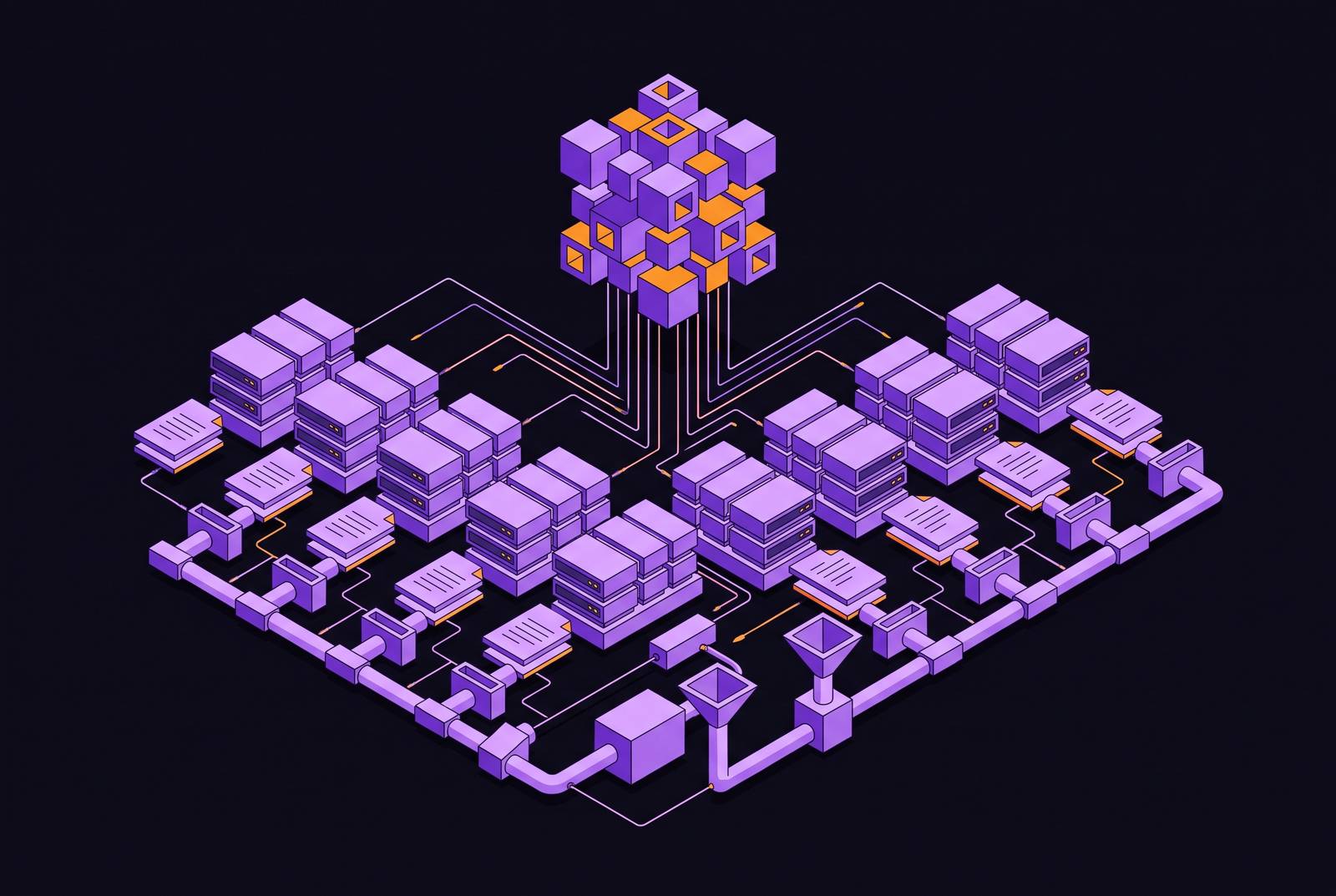
For a large-scale web scraping pipeline to work reliably, an autonomous orchestration layer must coordinate its fetch, extraction, and delivery stages. That layer decides how to access a page, recover from failures, preserve sessions, and return fresh structured data. Stronger scrapers alone cannot make the pipeline reliable when nothing coordinates their work.
Why large-scale scraping pipelines fail at the coordination layer, not the extraction layer
An agent treats a bot-detection interstitial as the target page and extracts from it because the fetch call appears to have succeeded. Scrapfly’s 2026 agent guide describes this failure in the observe, plan, act loop, where a bad observation leads the model to give a wrong answer with confidence.
The usual diagnosis points to a weak scraper or insufficient proxies. Yet individual fetch and extraction tools have matured, while the logic that decides when to call them, in what order, and how to recover remains the gap. A better parser cannot repair a bad observation. The pipeline needs something that recognizes the page is wrong before asking the model to reason over it.
That need grows as defenses change. Zyte’s 2026 Web Scraping Industry Report documents one major bot mitigation vendor deploying more than 25 version changes in 10 months alone. Manual tuning cannot keep pace with that cadence. When teams respond only by repairing individual scrapers, they leave the same coordination failure ready to recur.
How the AI agent loop redefines what "scale" demands from a scraping pipeline
Traditional scraping runs in an order that a developer sets ahead of time. The developer specifies what to fetch and when, the scraper executes, and failures may surface later. Agentic scraping changes who controls that sequence. The model decides when to fetch, what to extract, and when it has enough information to stop.
Scrapfly’s Grok agent guide shows how tool calling lets a model invoke fetch and extraction tools in sequence without orchestration code in the caller. But removing that code does not remove the need for coordination beneath the tools. Waiting for reliable, unblocked, structured content is where latency and failure accumulate, even when reasoning is fast.
Scrapfly’s agent guide separates web access into four layers, namely stable fetching, structured observation, persistent sessions, and tool integration. Fetching gets the page, observation makes it usable, sessions preserve continuity, and integration lets the agent invoke the tools. Each can fail independently of the model’s reasoning. Without stop conditions at the scraping layer, an agent that directs its own work can keep making calls that fail, so trial-and-error retries can cost more than anything else in a run.
What an orchestration layer actually is and where it sits in the pipeline
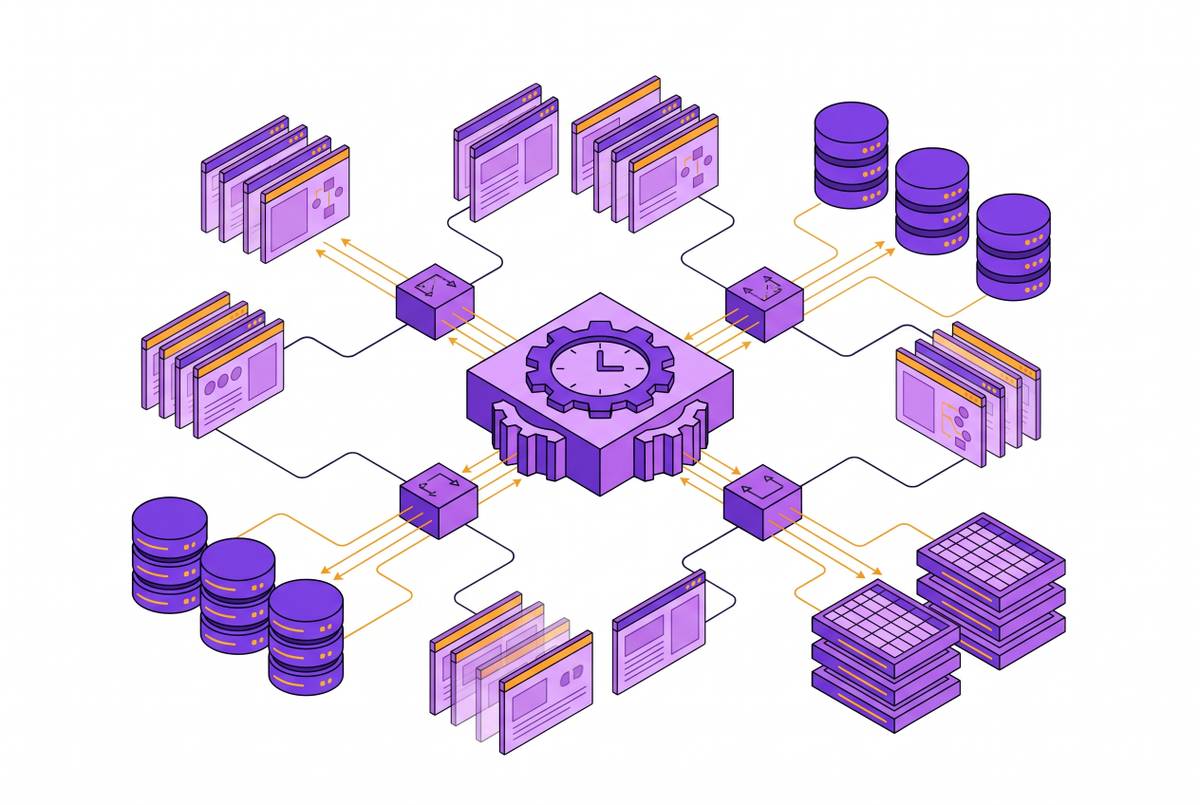
The orchestration layer sits above the fetch and extraction calls but below the agent’s reasoning model. The model expresses intent, such as “get the product price from this page,” while the layer decides how to fulfill it reliably. The positioning is simple. A text-based diagram reads “agent reasoning → orchestration layer → [fetch / extract / session tools] → raw web.” Delivery receives the resulting data rather than taking responsibility for access failures.
This is coordination logic. Its responsibilities include routing, retry, session continuity, and adaptive replanning. It selects the right tool for a job and detects degraded results before they reach the model. Those decisions let tools share a view of the task when they would otherwise work on their own.
Routing also depends on how a site permits access. Zyte’s report distinguishes hostile sites with active anti-bot defenses, negotiated access through licensing or attestation using protocols like x402 and Web Bot Auth, and invited access that welcomes agents. These regimes need different handling. Without a shared layer, projects using LangChain, LangGraph, CrewAI, AutoGen, or LlamaIndex must implement their own routing and retry logic around the tools they choose.
The five failure modes the orchestration layer must handle autonomously
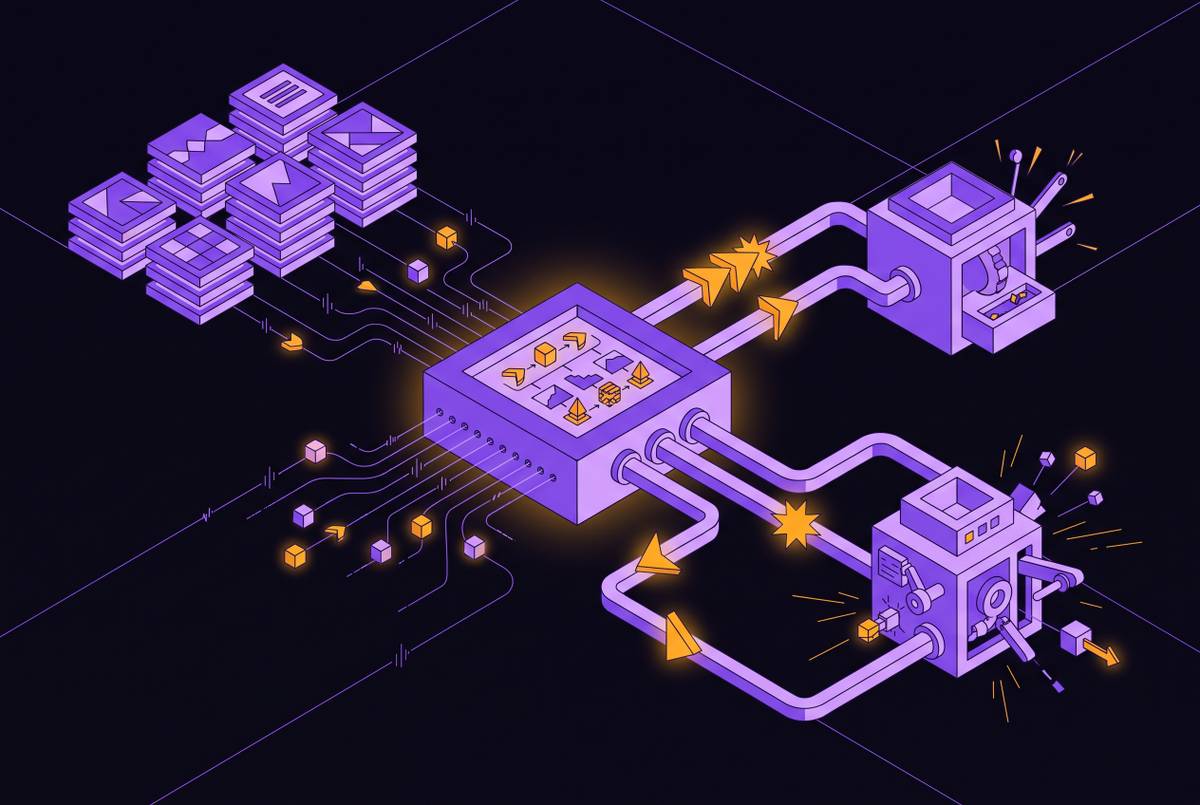
Anti-bot blocking creates a false success signal. A tool call returns successfully with an interstitial in place of the requested page. The orchestration layer must detect that substitution and route to an unblocking surface before passing content to the model.
JavaScript rendering creates a different gap between the fetched page and what a person sees. Selectors visible in DevTools may never appear in the raw HTML response. The orchestration layer must recognize when plain HTTP is insufficient and promote the request to a full browser render.
Session loss can break work that takes more than one step. An agent may authenticate on step one, then reach step five after its cookie expires or its proxy IP rotates. The site sees a new visitor instead. The orchestration layer must maintain session continuity across the full action sequence.
DOM mutation can make a selector fail even when it looks right. A model-generated CSS path can drift as the site changes, leaving extraction with zero results. The orchestration layer must detect it and invoke schema-driven or LLM-based re-extraction.
Geo and language mismatch can produce believable but wrong data. An agent running from a datacenter IP in one region may receive localized prices while expecting another region’s results. The page need not look broken at all. The orchestration layer must pin the request origin to the target locale.
Why this layer has been missing: the infrastructure-ownership assumption
Owning scraping infrastructure once made practical sense. Developers built expertise in proxies, headers, fingerprinting, and site-specific extraction because those skills kept collection working. When anti-bot changes were infrequent, manual tuning was viable. That approach stopped working when configurations that had lasted weeks began failing daily.
Each change brings more work than just fixing the request that failed. Bright Data’s session presented by Rafael Levi names the “scraper tax,” including site redesign inspection, selector repair, pagination fixes, and debugging. That tax compounds as the pipeline grows. Treating infrastructure ownership only as a skill hides the engineering time required to keep exercising it.
External APIs can make budgets unpredictable at volume, while in-house maintenance requires dedicated engineering headcount against an accelerating adversarial environment. Neither option is free of operating costs. The case for managed coordination rests on that comparison.
Zyte’s report describes the shift as “from infrastructure experts to data owners.” In 2026, developers are being pushed from solving one site at a time toward building systems that solve them. That explains why the missing layer has become harder to ignore.
How MCP standardizes the interface between agents and scraping infrastructure
MCP gives scraping infrastructure a standard way to expose capabilities as agent-native tools. A traditional scraping API waits for application code to call it, while an MCP server exposes tools the model can invoke during reasoning. The difference is who drives the call sequence. This common interface makes orchestration portable across frameworks.
The 2026-07-28 MCP specification revision added optional server/discover RPC so that capability negotiation can happen up front. It also formally reclassified the already-deprecated legacy HTTP+SSE transport as Deprecated under the new feature lifecycle policy. These changes support composable tool surfaces, with reliable web access dependent on capabilities outside the protocol itself.
Framework support also differs. LangChain, LangGraph, and CrewAI treat web-data MCP servers as first-class tool dependencies, while LlamaIndex offers narrower adapter-based support focused on retrieval. AutoGen has entered maintenance mode and ships no new MCP features. A platform offering both a scripted API and an MCP server can serve batch jobs and agents through the same integration.
The practical caution is to inspect what executes behind the interface. MCP is open, but a server’s execution layer may be closed. Teams should trace each tool call to the process, browser, proxy network, and paid API performing the work before committing to a dependency.
How do you integrate orchestration with an existing web scraping pipeline?
Developers can add orchestration at the seams between fetch, extraction, and delivery without discarding stages that already work. At fetch, the before-and-after change is from manually choosing an access method to routing each request by need. Read-only agent tasks should default to a scraping API. Actions such as clicking, authenticating, or submitting need a full browser session, and a request may also need to move from HTTP to a browser for rendering.
At extraction, fixed selectors and manual fallback choices give way to selection based on content type and confidence. Developer-defined schemas support predictable structured targets through JSON extraction. LLM-based extraction handles product specifications embedded in descriptions, conditional multi-step pages, and layouts where CSS paths are unreliable. The existing extraction tools remain useful.
At delivery, application-managed freshness becomes a rule enforced by orchestration. RAG pipelines use freshness TTLs to decide whether to re-fetch or reuse a cached chunk. Prices, scores, and breaking content need short TTLs of seconds to minutes, while reference content that stays the same can use hours to weeks. For site-wide ingestion, a crawler API under orchestration handles discovery, deduplication, and re-crawl scheduling without making the agent drive every URL.
The Grok pattern makes the integration seam concrete. Fetch, extraction, and pagination tools are defined as JSON schemas, and Grok chooses when to call them. Replacing the plain fetch tool with an API-backed call that handles anti-bot bypass requires no change to the agent loop.
A Multi-Agent Orchestration Framework for Venture Capital Due Diligence demonstrates a broader workflow. It combines real-time web retrieval, reverse-engineered endpoint querying, and OCR-based document processing in a single automated pass that previously required human analysts.
What to evaluate when selecting or building the orchestration layer
The build-versus-buy decision turns on four criteria, namely anti-bot adaptability, session persistence, tool surface flexibility, and integration speed. Pipeline volume and team size change the balance. Anti-bot adaptability is how well the layer can keep working as defenses change from today’s configuration. Integration speed is how quickly that capability can fit into the stages already in place.
A system that fetches each page reliably can still fail when it has to pick up work across tool calls. Rotating proxy IPs make reliable session resumption non-trivial in self-hosted setups.
Tool surface flexibility is what lets batch jobs and agents share the same integration. Teams that need both should not maintain two separate pipeline architectures. A scripted API and an MCP interface can expose the same underlying capabilities while leaving each caller in control of its own sequence.
These criteria provide a firmer basis for selection than a general vendor ranking. The decision compares external API spending with the engineering work needed to build and maintain equivalent coordination. A layer that fits one team’s volume and staffing may be the wrong choice for another.
Building a self-adjusting pipeline: from the orchestration concept to a working agentic architecture
A working agentic architecture puts detection and rerouting inside the pipeline instead of leaving every recoverable failure in a human response queue. The agent expresses a goal, and orchestration selects the tool surface, handles anti-bot blocking, and maintains session continuity. Extraction returns clean structured content, while freshness rules govern reuse and re-fetching. Genuine failures still reach human review.
That is a concrete operating model. Zyte’s report identifies automatic adaptation to website changes as an emerging direction for AI-native extraction platforms, while noting that it is not yet widely deployed in production. Self-adjustment therefore needs to be judged by the failures a system actually detects and handles. The label alone proves nothing.
For competitive intelligence, price monitoring, and GTM data pipelines, continuously decaying B2B contact and product data makes continuous extraction defensible in a way periodic list purchases or manual re-scraping are not. Teams that assembled scraper, proxy, parser, and scheduler as separate point solutions can move from maintaining four integration surfaces to one coordinated boundary.
The developer’s role then shifts toward defining data requirements, setting constraints, and supervising agents. That creates room to ship features faster and build products that reason over live data.