Real-Time Web Monitoring for Event-Driven Agent Triggers
Programmatic monitoring APIs let agents act on web changes in real-time instead of polling.
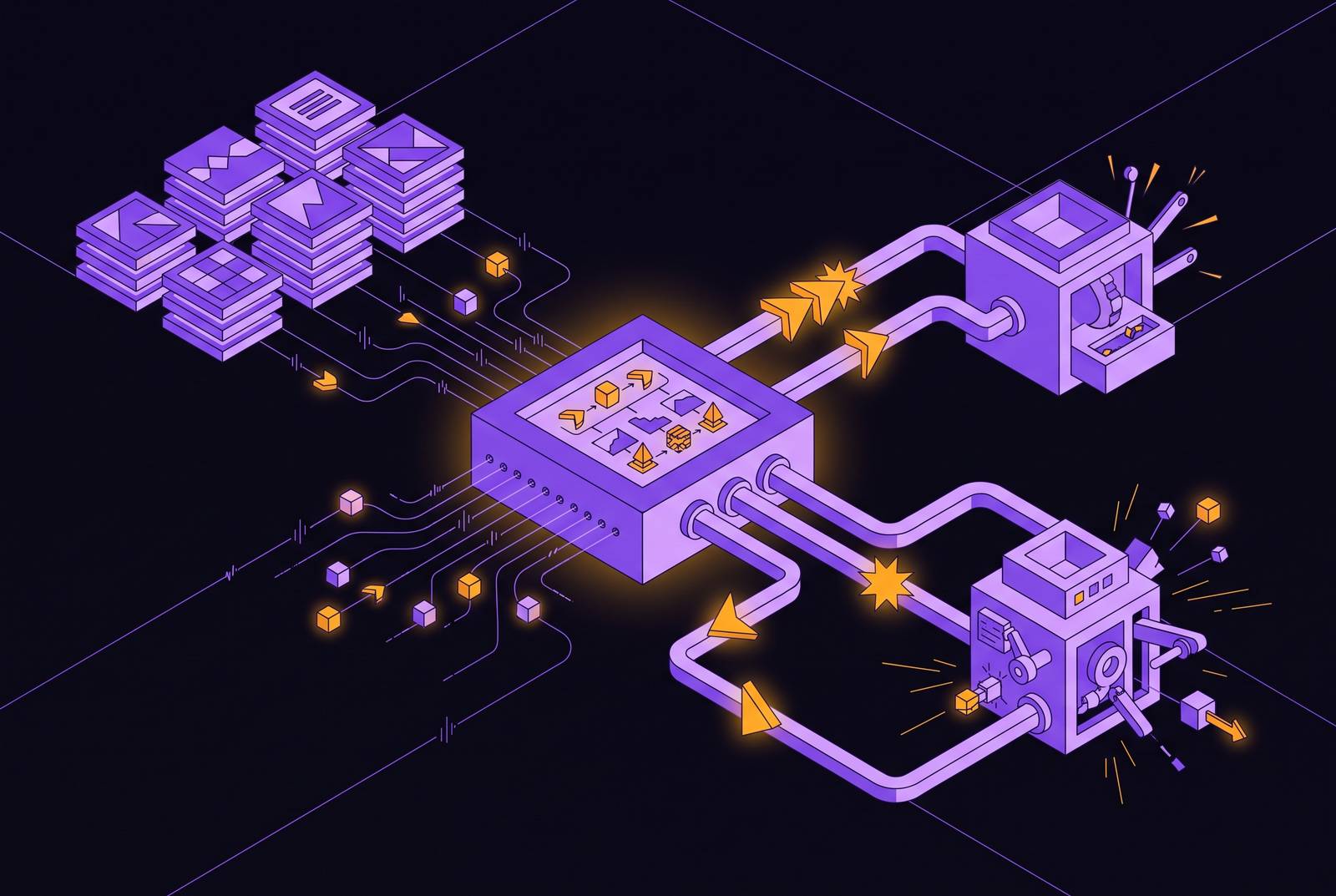
Most LLM applications still work like a customer service counter: someone walks up, asks a question, gets an answer, walks away. Real-time web monitoring flips that setup on its head, running in the background and firing off an action the second something specific changes online. That inversion sounds simple, but it breaks the way most AI systems handle data, and fixing it means rethinking the whole pipeline from the page fetch to the agent's final decision.
The problem gets worse once you factor in training cutoffs. A model has no idea what happened after its knowledge was frozen, and nightly re-indexing doesn't fix that when the thing you care about (a price change, a regulatory filing, a competitor's product launch) can happen at 2pm on a Tuesday. Waiting for tomorrow's batch job is a delay dressed up as a system. It's a delay dressed up as a system.
What the web monitoring category looks like in 2026
Three distinct product families answer three different questions, for three different audiences.
Uptime monitoring, the Pingdom and UptimeRobot type of tool, answers "is the site up?" It's built for ops teams watching a performance dashboard for a certain metric, and it's been around long enough that nobody argues about what it's for.
Content change detection is a different animal. Tools like Visualping and Distill.io watch a specific page and flag when something on it changes, visually or in the text. The output is usually a side-by-side screenshot comparison plus a plain-language summary, and it's built for a person to glance at and decide whether it matters. That's the whole design: human eyeballs, human judgment, human next step.
Programmatic web monitoring APIs are the newest of the three, and they work on a completely different premise. Instead of a URL and a screenshot, you give them a natural language query. They scan on a schedule, and instead of an email, they send a structured event through a webhook or API callback. The reader is a machine parsing JSON, not a person checking their inbox. It's a machine parsing JSON.
That distinction is the whole ballgame. Traditional monitoring tools notify humans. Programmatic APIs notify machines. Once the consumer of the alert shifts from a person to an agent, everything downstream, the format, the delivery method, the error handling, has to change with it.
Google Alerts sits in an odd spot here. It's free, it does keyword and Boolean search, and it's fine for keeping half an eye on a topic. But updates can lag 12 to 48 hours behind the actual event, delivery isn't reliable, and the output has no real structure to it. Fine for ambient awareness. Not something you'd want holding up a production pipeline.
This piece is about the third category: programmatic web monitoring APIs built to talk to machines, not people. If that's the problem in front of you, keep reading.
Why the pull model breaks with agents as consumers
Every legacy tool in this space runs on the same loop: a person picks a URL, points to a CSS selector, the tool checks it on a timer, and an email or dashboard alert shows up for a human to act on. That loop has three specific failure points once you swap the human for an agent.
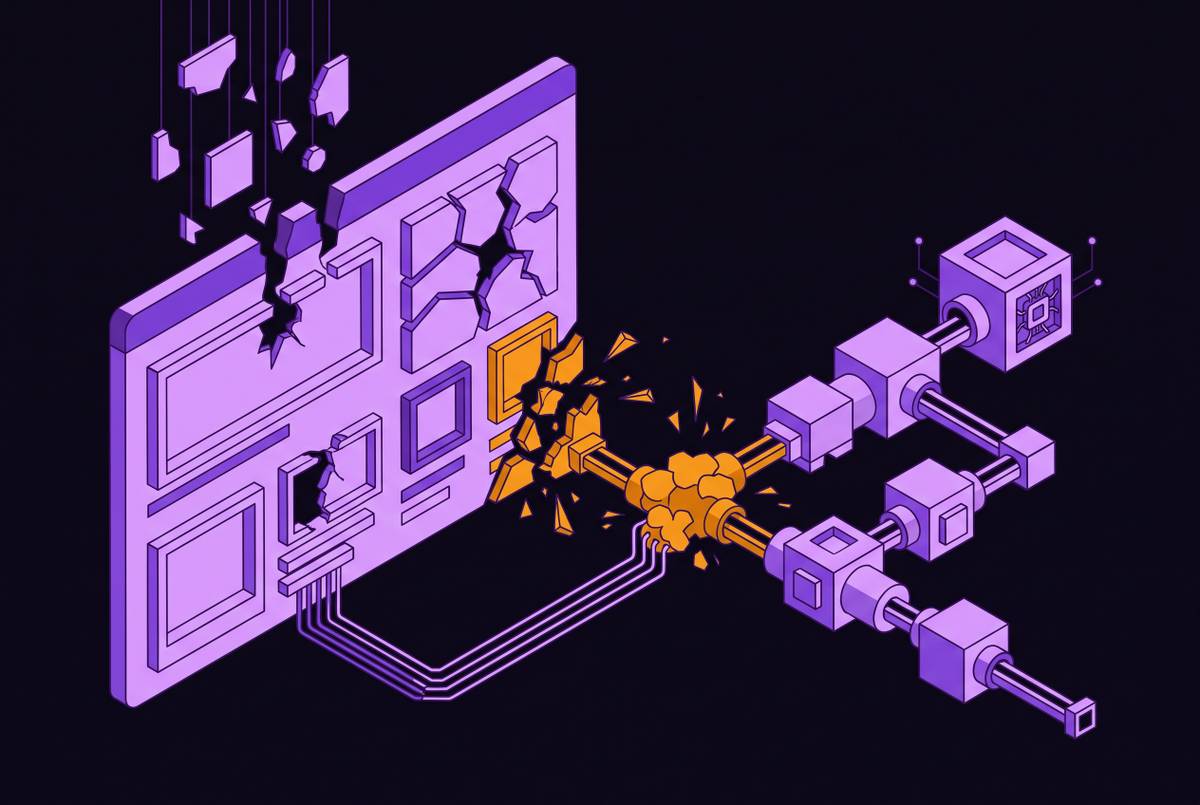
First, configuration. CSS selectors and URLs aren't how agents express what they want. An agent can't say "watch for competitor product launches" to a tool that only understands div.pricing-table > span.price. And when the target site redesigns its layout, which happens constantly, that selector breaks quietly. No error, no warning. Just silence where an alert should be.
Second, the output itself. An HTML diff is fine for a person scanning a screenshot. It's close to useless for an LLM that needs extracted entities, dates, and a clean summary in a schema it can rely on every single time.
Third, delivery. Email and dashboard notifications don't translate into an HTTP callback an agent's endpoint can receive. The infrastructure just isn't built for a machine on the other end.
The sharpest risk in all this is the silent failure. An agent can accept a task, chew through the input, and spit out an answer, all while getting the substance wrong, and nothing crashes. No stack trace, no alert. Just a quietly wrong answer sitting in a database somewhere, and another one next to it, and another, until someone finally notices the pattern.
This also creates a cost problem: polling adds tokens spent, latency, and duplicate events. If an agent has to keep polling the open web to check "did anything change yet?", that's tokens spent, latency added, and duplicate events waiting to happen. A push model skips all of that: the monitoring service watches, and the agent gets a nudge only when something's actually worth knowing.
The three-component push architecture for web-triggered agents
Making the push model work for agents comes down to three pieces working together.
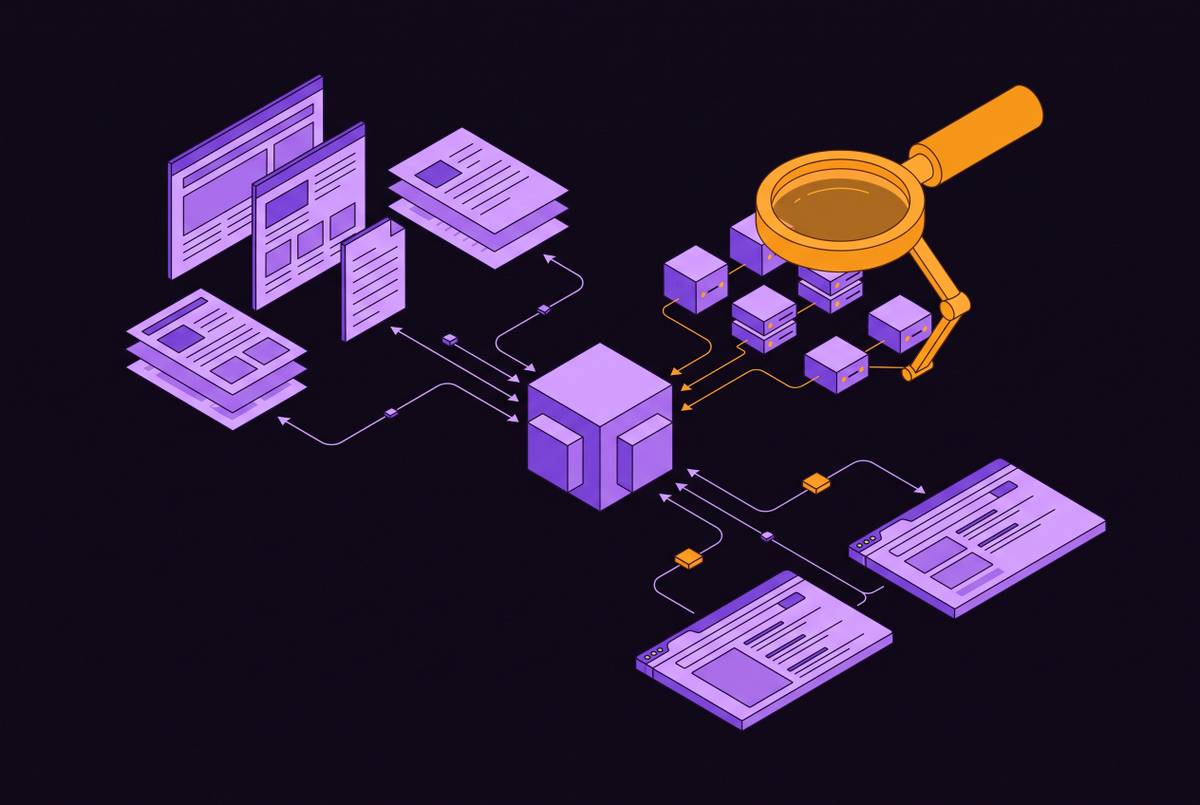
The first is the monitoring API itself, the thing that actually scans the web. It keeps its own index of what it's seen before, handles deduplication so the same change doesn't get reported twice, and runs on whatever cadence makes sense (hourly, daily, weekly), firing an event only when something new and relevant appears.
The second piece is the webhook endpoint sitting on the receiving end. The application exposes an HTTP endpoint, and the monitoring service POSTs a structured JSON payload the moment it detects a relevant change. That payload should carry a summary, the source URL, a timestamp, and an event identifier, so the agent has real facts to work with instead of a raw diff to puzzle over.
The third piece is whatever comes after, the agent or pipeline logic that reads the event, classifies it, weighs it for action, and executes.
A monitoring API that's worth using in 2026 handles a handful of things a developer would otherwise have to build from scratch: scheduled fetching through a real browser (so JavaScript renders and bot protection doesn't block the request), change detection against the last snapshot, diff output in text, HTML, Markdown, or screenshot form, and delivery through webhooks, email, or push notification.
AI-powered diff summarization is increasingly common on top of all that. Instead of handing an agent a raw diff, the monitoring layer describes the change in plain language, something like "the Pro plan price moved from $49 to $59 a month," and describes the nature of the change in plain language. That summarization step is what turns a page diff into a signal an agent can actually reason over, rather than a wall of markup it has to parse cold.
Without deduplication safeguards, a duplicate webhook fires a duplicate agent action, like sending the same pricing alert twice. That's basic hygiene, and it should be built in from day one.
What the web access layer must deliver before the agent sees anything
Four layers underlie any of this, and if one of them is weak, everything built on top of it inherits the weakness.
Page loading comes first. JavaScript has to actually execute, anti-bot defenses have to get bypassed, and the response needs to reflect what a real visitor would see in a browser. Skipping this layer causes every layer above it to report a phantom failure, because the agent is analyzing a page that never really loaded.
Output format is next, and it might be the single most consequential choice in the entire stack. Raw HTML burns tokens on markup nobody needs. Plain text strips out the structure that gives a page meaning. Clean Markdown keeps the hierarchy (headings, lists, tables) while trimming the noise, and structured JSON skips the parsing step. The token math here isn't small: a 10-page site rendered as raw HTML can run past 50,000 tokens, while the same content in clean Markdown often comes in under 5,000. That's a 10x difference, and it compounds fast once a monitoring pipeline is making thousands of scheduled calls a day.
Handling authenticated content matters for anything behind a login wall, so multi-page tasks don't have to restart from scratch every time.
Tool integration rounds it out: whatever lets an agent call the scraping function as a native tool rather than something bolted on the side.
Turning a detected change into a structured event an agent can act on
The webhook payload is the contract between the monitoring layer and the agent. Source URL, timestamp, a change summary, a structured diff: each of those fields is a fact the agent can reason over without going back to fetch the page again.
From there, the change summary and source URL usually get handed to a language model for a second pass, classification, sentiment, impact scoring, whatever turns "something changed" into "this is a business signal worth acting on."
None of that works without clean input. Research on structured web extraction consistently finds that LLM accuracy depends heavily on the quality of the data going in rather than the model itself. The model isn't the bottleneck anymore. The extraction layer is.
Three extraction approaches cover most cases. Templates using CSS or XPath selectors work well when a page's structure is stable and predictable. LLM prompts handle the messier cases, pages that vary in layout or don't follow a fixed pattern. And auto models cover the common shapes, product pages, reviews, listings, where the structure is predictable enough to standardize.
Event delivery infrastructure: matching the broker to the agent's latency requirements
The broker sits between the monitoring webhook and whatever processes it downstream, and getting this choice wrong causes latency spikes and duplicate events at exactly this point.
Apache Kafka is the industry standard for high-throughput streaming, handling market feeds, IoT data, or clickstream volume. It comes with real operational overhead, so it earns its place when volume, not routing complexity, is the constraint.
RabbitMQ leans the other way: complex routing logic and reliable delivery to specific consumers, with lower ceiling throughput than Kafka but a much easier deployment story. Pick it when the routing logic is the hard part, not the raw volume.
Redis Streams delivers sub-millisecond latency, which matters when agents need to coordinate in something close to real time. It's capped by available RAM, so it fits moderate-volume, low-latency coordination better than massive throughput.
NATS is the lightweight, cloud-native option, a single binary that still manages high throughput and low latency, built with microservices and agent swarms running on Kubernetes in mind.
For workflows that don't stop at a single response, where a monitoring event kicks off a whole chain of downstream actions, Temporal fills a different role as a durable execution layer. It guarantees a workflow finishes even when something fails partway through, handling retries, timeouts, and state tracking so that logic doesn't have to get hand-rolled into every agent.
Idempotency keys matter again here, at the broker level, not just at the webhook receiver. A broker retry that redelivers a message is a different failure mode from a duplicate inbound request, and it needs its own safeguard.
Three production patterns for routing web change events into agent workflows
A set of competitor URLs gets monitored daily. When a structured diff comes in through the webhook, an LLM classifies what kind of change it is, pricing, feature, messaging, and a router sends it to the right specialist: pricing changes to a pricing agent, feature changes to a product agent. This router pattern is arguably the highest-leverage architectural choice in agentic systems right now, since sending each event to the cheapest model that can actually handle it cuts LLM spend by a wide margin without losing accuracy. The agent logs a summary to a shared knowledge base and only pings Slack when the change is actually significant.
Government and regulatory pages get watched for document updates, and before an event is even dispatched, the AI summarization step at the monitoring layer flags a given change as substantive or merely cosmetic. Only the substantive ones reach the compliance agent, which cuts the noise and saves human attention for changes that actually matter. From there, the agent pulls in relevant internal policy documents through retrieval, builds an impact summary, and routes it to a human reviewer if it crosses a materiality threshold.
Monitoring the monitor: observability for the event-driven agent pipeline itself
Plenty of organizations already have agents running in production, but most enterprise agent incidents trace back to engineering-level gaps in observability and evaluation rather than the model itself getting something wrong.
Event-driven pipelines bring their own failure modes, and uptime monitoring won't catch a single one of them. The monitoring API can fetch the page just fine while the actual diff is purely cosmetic, and the agent fires anyway, reacting to noise. A webhook can deliver on schedule while the payload schema has quietly shifted underneath it, so the agent parses it wrong and produces a bad output with no error thrown. A broker can redeliver the same event twice, and the agent takes the same action twice, sending the same alert, charging the same fee, writing the same row. Or the agent classifies everything correctly and the downstream tool call still fails, so the task looks finished on paper while nothing actually happened.
A standard uptime check does not detect any of these. They only show up if someone's watching the pipeline itself: tracking event volume against expected baselines, watching for schema drift in incoming payloads, checking duplicate rates at the broker, and confirming that classified events actually result in completed downstream actions, not just attempted ones.