Multi-Agent Orchestration With Specialized Subagents
Specialized agents working in parallel outperform a single generalist model on complex tasks.
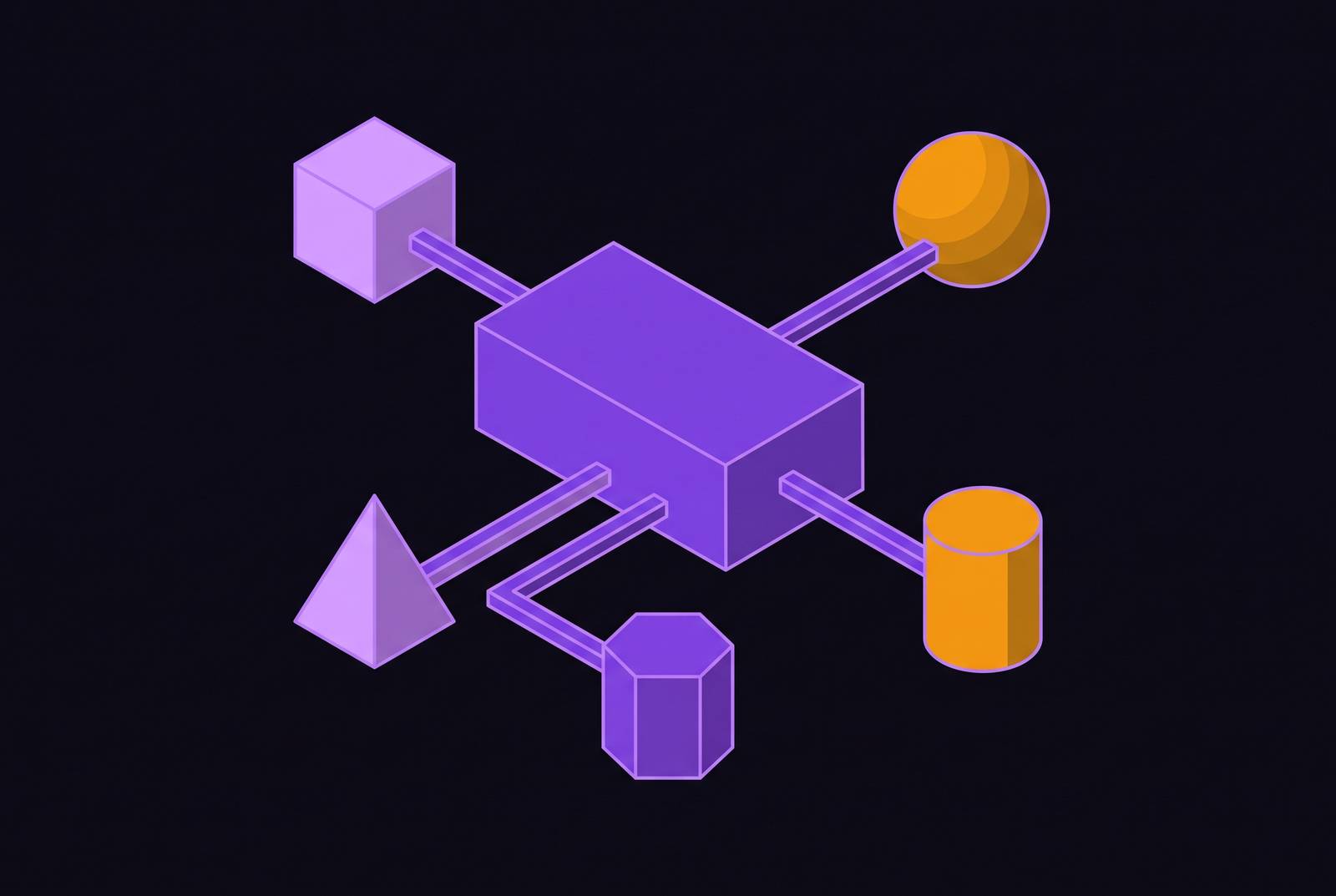
Multi-agent orchestration works because it maps distinct cognitive roles onto distinct agents, so no single model has to hold every role at once.
Why a single generalist agent breaks down
A prompt that satisfies one domain's edge cases can work against another domain's edge cases, so you end up with a brittle, overloaded instruction set that degrades under real traffic. Sequential reasoning inside one agent also accumulates latency with no way out, because a lone agent can't parallelize work that is structurally independent, and it can't will two unrelated subtasks into running at the same time. Centralizing access to diverse, sensitive datasets in one agent creates a single point of failure for both security and audit, and that's a risk regulated domains like FinTech, HealthTech, and LegalTech can't absorb. Codebridge's 2026 orchestration guide names this directly: in many production deployments, system design limitations, data isolation, and orchestration complexity now constrain performance more than the underlying model's capability, and in systems serving thousands or millions of users, those constraints turn into systemic risk. This gap is visible in a DevOps incident-response case: multi-agent orchestration produced a fully actionable recommendation in the large majority of trials, but single-agent approaches on the identical task produced one in a negligible share of cases. It's a structural problem that architecture, not better prompting, closes.
How cognitive specialization maps distinct roles onto distinct agents
The fix isn't a bigger model, it's dividing the work by cognitive function: a planner that decomposes the request, a retriever that gathers evidence, an executor that acts, and an evaluator that checks the result, each confined to the reasoning boundary its job actually requires. The mechanism that makes this work is isolation. Each agent has no peer-to-peer channel to the others and no shared mutable state during execution, so any one agent's token budget stays bounded and a failure stays contained to the agent where it happened. Anthropic's own multi-agent research architecture follows this exact shape: a lead agent analyzes the query, plans the strategy, and synthesizes the final findings, while sub-agents gather and filter data in parallel, each running its own parallel tool calls, and on internal evaluations this approach beat single-agent benchmarks by a wide margin. The pattern holds at smaller scale too: three focused agents consistently outperform one generalist agent given three times the working time, because parallelism, specialization, isolation, and compound learning multiply each other's effect rather than simply adding up. That compound-learning piece matters on its own. A file like AGENTS.md captures patterns and gotchas across sessions, so each session starts smarter than the last, but a monolithic agent has no clean boundary where it can store and reuse those lessons. Specialization is the architectural precondition for the five coordination patterns that follow: each has a distinct control-flow, a distinct cost structure, and a distinct failure surface, and collapsing them obscures the decisions that matter in production.
The five coordination topologies
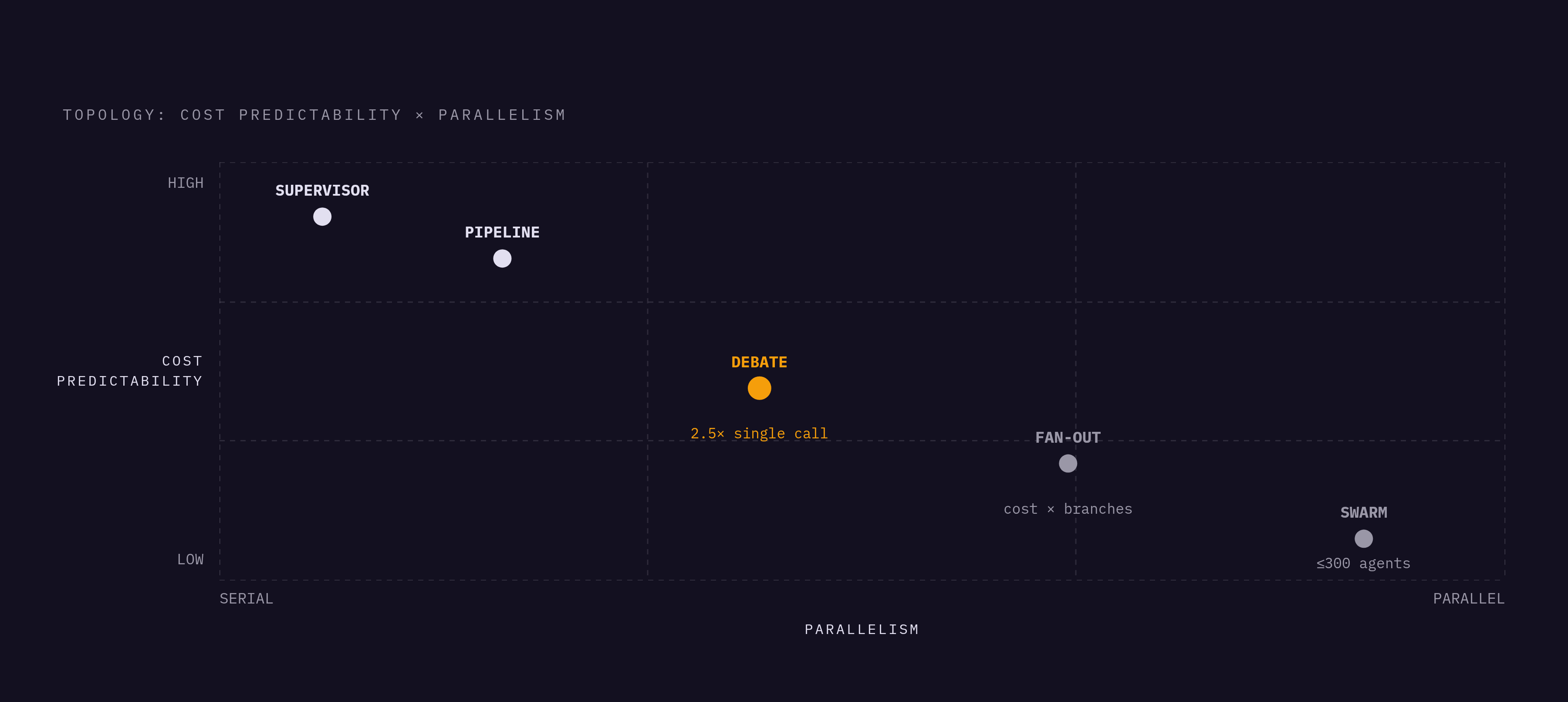
Supervisor, fan-out, pipeline, debate, and swarm are five dominant topologies, not style preferences, and each carries its own control-flow, its own cost structure, and its own failure surface. Collapsing them, which is what most published pattern guides do, hides the decisions that matter once a system reaches production.
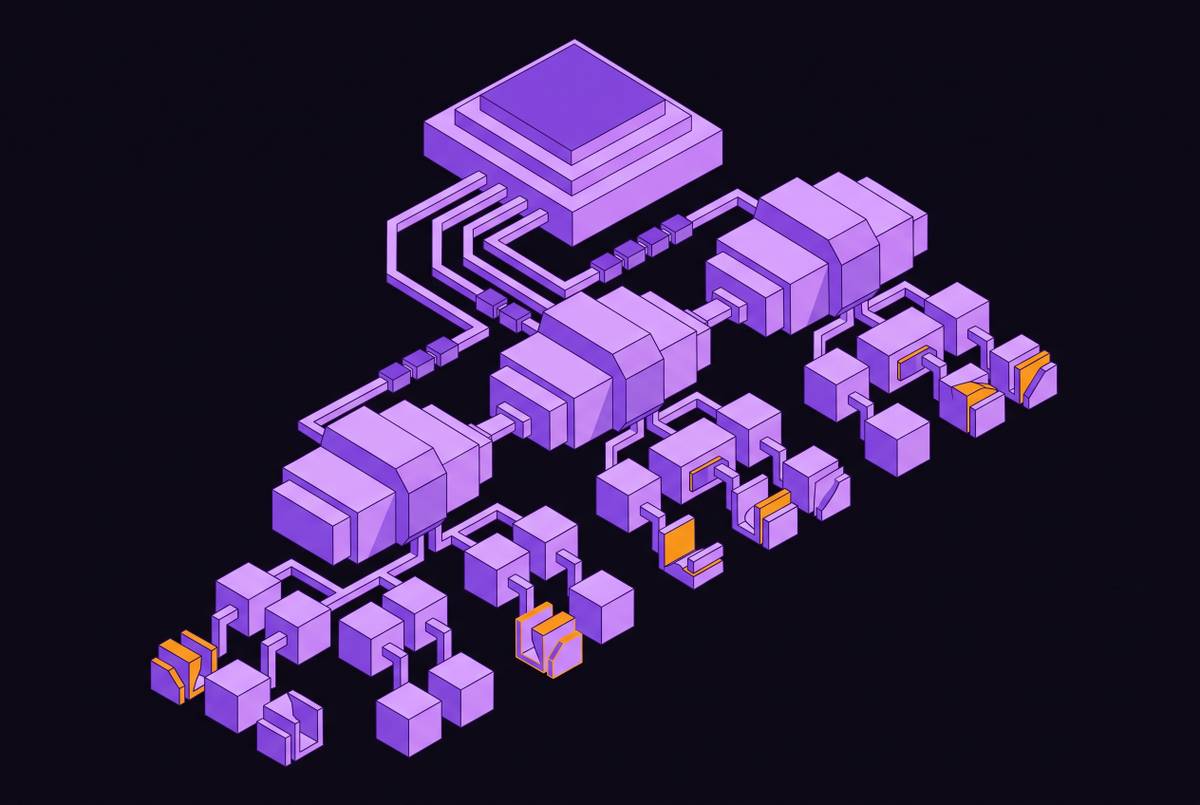
The supervisor pattern puts a top-level agent in charge of receiving the request, decomposing it into subtasks, delegating each to a specialized sub-agent, and aggregating the results, with sub-agents working their subtasks without visibility into each other's output. Digital Applied's 2026 patterns guide identifies supervisor as the 2026 production default: Claude Code subagents operating one level deep, LangGraph Supervisor, and OpenAI Agents SDK handoffs all converge on this topology. It fits cross-domain work where subtask ownership is clear, and the textbook case is a coder, a researcher, and a reviewer working their own lanes. Its failure mode is at the top: if the supervisor misdecomposes the task, every sub-agent below it executes flawlessly against the wrong problem.
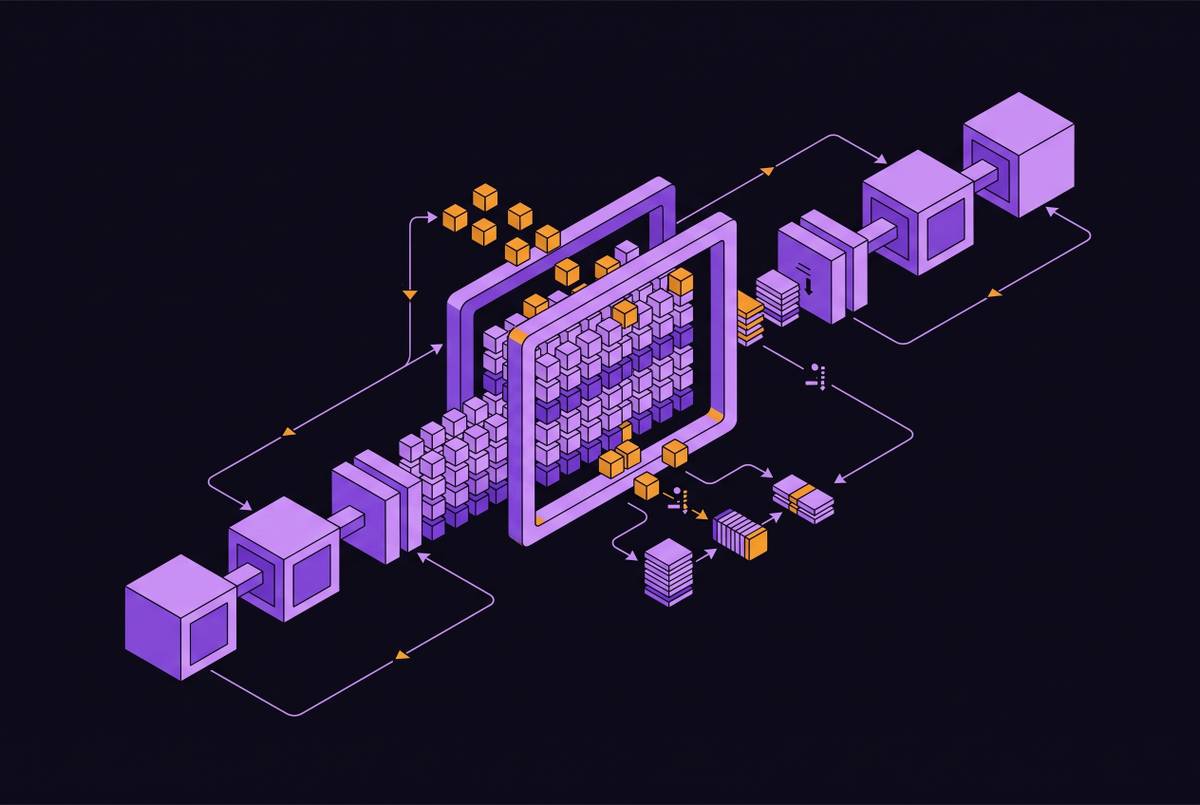
In fan-out, several specialized subtasks go out to multiple agents at once, and aggregation waits for every branch to return, so total latency comes from the slowest branch rather than the sum of all of them. Fan-out is not pipeline wearing a different name. Fan-out branches run independently and concurrently, but pipeline stages run in sequence, and each one depends on the stage before it. Osmani's code agent walkthrough shows both patterns living inside a single system: in the Link Shelf build, the Data Layer and Validation subagents run as a fan-out, in parallel, while the API Routes subagent waits for both of their report files to land before it starts, which is a pipeline dependency sitting downstream of a fan-out stage. Fan-out's failure mode is the slow branch. If you don't build in timeouts and partial-result handling, a hung or failed branch blocks the whole aggregation step.
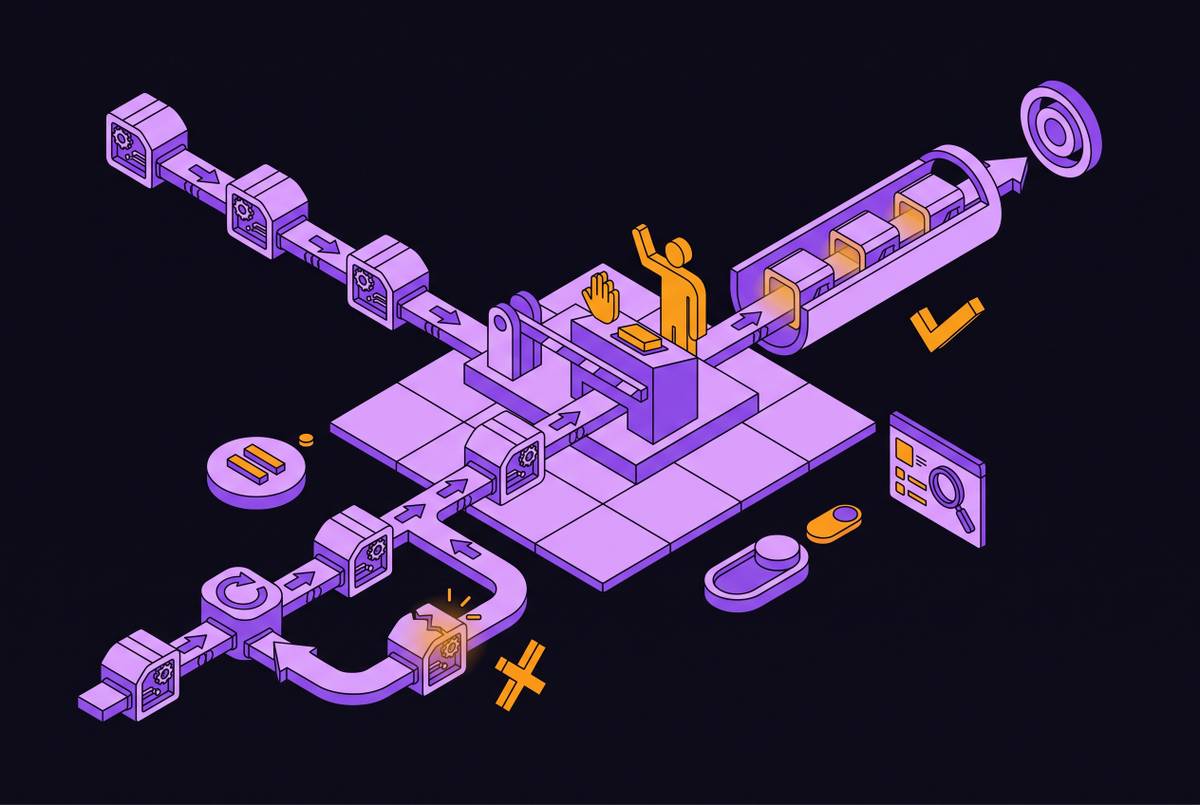
Pipeline passes each agent's output forward as the next agent's input, stage by stage, with every stage depending on the full output of the one before it. It fits work where each step genuinely needs the completed previous step, drafting a document, then running legal review on it, then formatting the reviewed draft, as one example. Its failure mode is errors that propagate and amplify downstream, so a bad output at stage two corrupts every stage after it, and there's no parallel branch anywhere in the structure to catch the mistake before it spreads.
Debate runs multiple agents against the same question on their own, then hands their answers to a judge model that arbitrates and synthesizes a final output. Microsoft's Copilot Council runs GPT-5.2 and Claude in parallel and then uses a judge model to arbitrate between them, a structure that substantially raises the cost of what would otherwise be a single model call, and the two-stage Critique variant of this pattern adds a further cost increment on top of that. Debate's failure mode is cost that scales with the number of debating agents and the judge pass layered on top, combined with no guarantee that the judge model is actually better at arbitration than the agents it's judging. It fits high-stakes decisions where a wrong answer costs more than the coordination premium, not general-purpose quality improvement.
Swarm runs a large population of peer agents in parallel with dynamic task assignment and no fixed hierarchy between them. Kimi K2.5 coordinates up to 100 specialized sub-agents executing as many as 1,500 tool calls in parallel, using Parallel-Agent Reinforcement Learning to manage the coordination, and K2.6, released April 20, 2026, extends this to swarms of 300 agents running 12-hour autonomous coding sessions. Swarm is a genuinely different topology from a supervisor managing three subagents, even though both involve some coordinating layer. Scale and dynamic task assignment, not just a bigger number of agents, are what separate it. Its failure mode is coordination overhead that grows non-linearly as agent count rises, so if you don't set explicit cost and timeout controls, a swarm can burn budget on low-value branches and you won't notice until the bill arrives. Swarm fits frontier-scale parallelizable work. It isn't where most production teams should start.
Choosing a topology given task structure, cost tolerance, and failure consequences
The topology a system should use can be read off the task itself before a line of orchestration code gets written, by checking three things in order: how the subtasks relate to each other, what the system can afford to spend, and what happens when something goes wrong. Task structure comes first. Work that splits cleanly into parallelizable, domain-separated pieces points toward supervisor or fan-out, while work where each step depends on the completed output of the step before it points toward pipeline, and work that needs adversarial, cross-checked validation points toward debate, with large-scale parallel work under dynamic assignment pointing toward swarm. Uno-Orchestra, an arXiv paper from May 2026, formalizes the first half of this judgment: simple queries should be answered directly without any decomposition at all, while harder queries should decompose into subtasks whose dependencies form an explicit graph, and the paper's core argument is that decomposition depth and the choice of which worker handles which subtask have to be optimized together, not set independently.
Cost tolerance narrows the field further. Debate running at roughly 2.5 times the cost of a single model call only makes sense when the cost of being wrong, regulatory exposure, reputational damage, financial loss, exceeds that coordination premium. Fan-out multiplies inference cost by the number of parallel branches it spins up, but supervisor and pipeline stay more cost-predictable, because they stay serial at the orchestration layer even when their sub-agents do parallel work. Swarm-scale costs are still a frontier concern, so most teams don't need to budget against them as a default.
Failure consequences settle what's left. If you don't build in checkpoints at each stage, one bad output in a pipeline corrupts everything downstream, but a supervisor topology contains a failure to the sub-agent whose subtask went wrong, so it's a meaningfully safer default. The supervisor pattern's own weak point, bad task decomposition at the top, deserves to be designed against first, because that failure propagates silently through every sub-agent below it before anyone notices the root cause.
Framework choice should follow from the pattern a task calls for. Digital Applied's 2026 compatibility matrix, covering nine frameworks, shows LangGraph v1.0 spanning all five patterns natively, while the Claude Agent SDK excels at supervisor and fan-out but needs custom code to support debate and swarm. The right move is picking a framework because it supports the dominant pattern a task needs, not because a team already knows one ecosystem better than another. The broader 2026 evidence narrows where multi-agent systems actually win to a fairly specific task profile: parallelizable work, read-heavy work, or narrow-domain reliability work, while sequential tasks or tasks that depend on shared state still favor a single agent.
Web data retrieval as a specialized subagent role
Retrieval is usually the first specialized subagent role a team builds, and the real differentiator between retrieval tools isn't how much of the web they cover or how fast they respond, it's whether their output lands in a format a downstream LLM can use immediately, without a cleanup step in between. A retrieval agent's actual job inside a multi-agent system is to fetch live web content, convert it into a format the reasoning agent can consume directly, and hand it back, so the orchestrator never has to do raw HTML parsing work. That conversion step is the architectural decision, not an implementation detail tucked away at the bottom of the stack.
The tool landscape has split into two approaches. Open-source crawlers adapted for AI pipelines, Crawl4AI being one example, use Playwright to render pages and then run a content-preparation step that turns the rendered DOM into clean Markdown or structured JSON, while managed API services instead bundle JavaScript rendering, proxy rotation, and anti-bot handling into a single call. Anti-bot evasion belongs in this discussion as a real production constraint. When a request goes straight to a deep content URL with no referrer and no prior navigation history, that's the clearest signal that flags it as a bot, since real users land on a homepage first and click through intermediate pages before they reach the page they want. If a retrieval agent teleports directly to a target URL with an empty session history, it trips exactly that signal, gets blocked, and quietly degrades the whole pipeline's output, often with no obvious error anywhere. Integration speed carries real architectural weight too: a retrieval subagent wired up through one API call saves weeks of pipeline work compared to one that requires building and maintaining a custom crawler stack before any reasoning can even begin.
Agentic RAG, why iterative retrieval inside an agent loop outperforms a single retrieve-then-generate cycle
Standard retrieval-augmented generation grounds a model's output in externally retrieved knowledge instead of relying only on what's baked into its training data, which is what lets it answer questions about events or facts past its knowledge cutoff. The classic version of this pattern retrieves once and generates once, and that single pass is exactly where it breaks down on any question that needs more than one round of evidence gathering to answer properly. A question that requires checking one fact, then using that fact to decide what to look up next, simply can't be answered correctly by a pipeline that only gets one shot at the retrieval step.
Agentic RAG fixes this by moving retrieval inside the agent's reasoning loop instead of treating it as a preprocessing step that happens once before reasoning starts. Instead of fetching a batch of documents up front and generating an answer from whatever came back, the agent retrieves, reads what it got, decides whether it has enough to answer or needs another round, and if it needs more, it retrieves again, each round informed by what the previous round turned up. That loop structure is what the retrieval subagent role described earlier is built to support: a dedicated retrieval agent that an orchestrator can call repeatedly, mid-reasoning, rather than a one-shot data source queried once at the start and never revisited. Treating retrieval as a capability the agent reaches for on demand, rather than a fixed input it's handed once, is what separates agentic RAG from the retrieve-then-generate pattern it replaces.