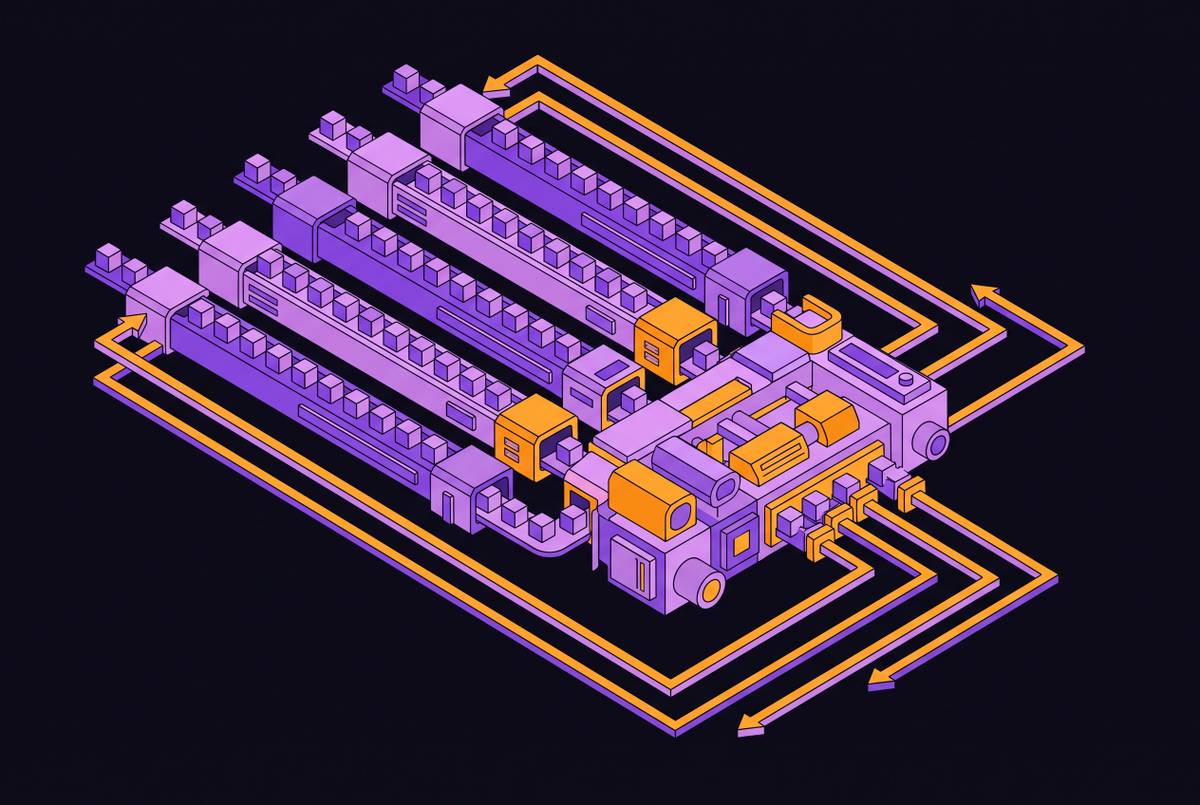
Managed Scraping API vs Self-Hosted Headless Browser Stack
Managed APIs handle anti-bot complexity; self-hosting demands constant maintenance.
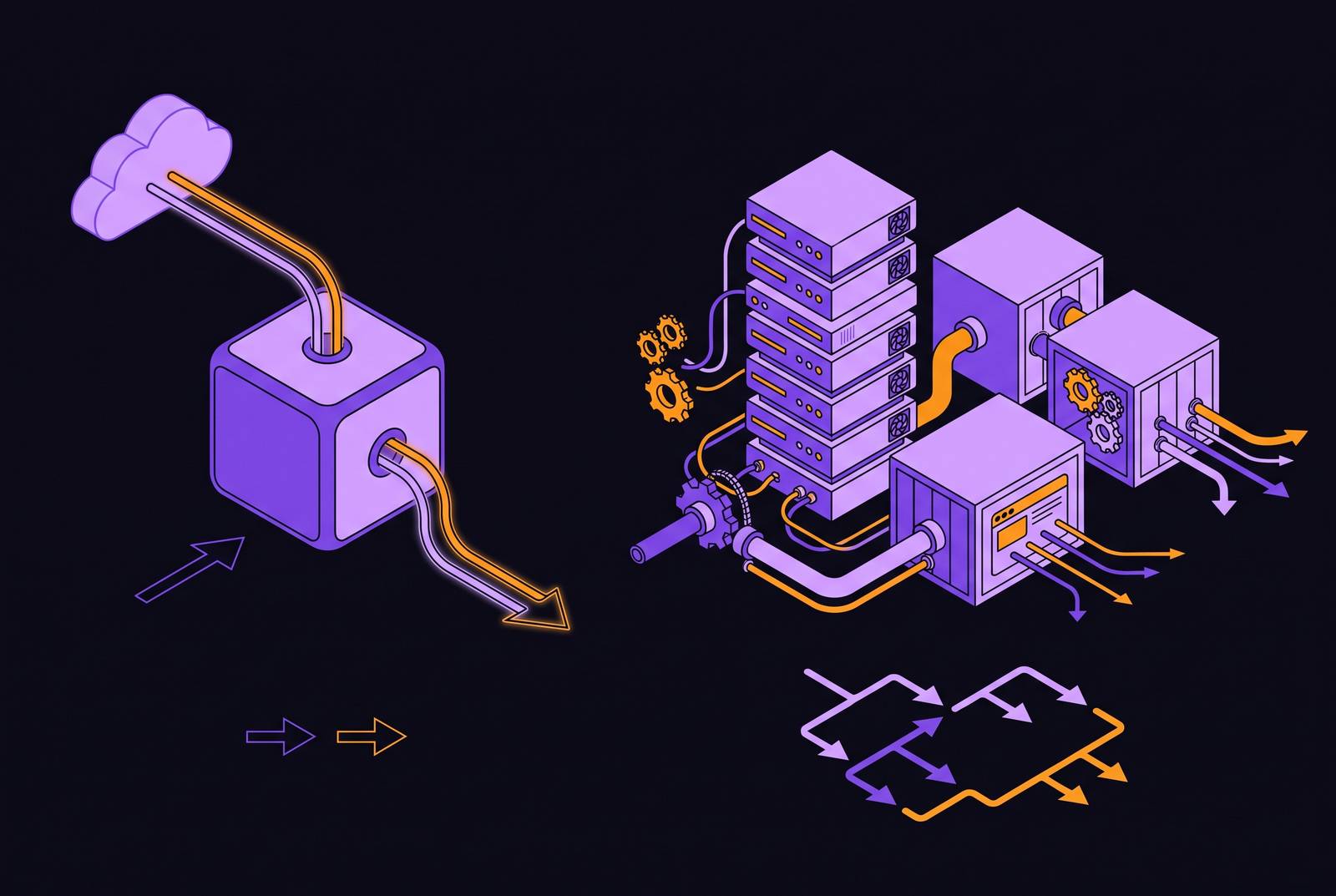
The decision between a managed scraping API and a self-hosted headless browser stack is really a decision about what a team wants to spend engineering hours maintaining. The browser itself, Playwright or Puppeteer or Selenium, is the easy part. Everything that surrounds it (fingerprinting, proxy rotation, anti-bot evasion, scaling) is where the real, recurring cost sits.
The Hard Part of Self-Hosting a Scraping Stack
Most teams start the conversation in the wrong place: should it be Playwright or Puppeteer? That question feels like the hard decision, so it gets the most attention, the most debate, the most Slack threads. That choice has little bearing on whether the scraper works in production.
Browser automation frameworks were built for testing and automation, not for adversarial scraping environments. Playwright and Puppeteer render pages well. Selenium drives a browser reliably. None of them were designed to fight an anti-bot system that doesn't want them there. In a scraping context, each of these tools needs proxy management, IP rotation, fingerprinting and stealth, CAPTCHA handling, retry logic, and ban detection bolted on separately, and none of that comes in the box.
Production anti-bot systems don't just check whether JavaScript renders. They look at HTTP headers, client hints, TLS fingerprints, device profiles, timezones, and even graphics stack characteristics. If you run Playwright with its default settings against a site that takes bot detection seriously, it gets flagged. The browser gets flagged because the signals around it give it away, not because it renders pages badly.
A team has to decide which parts of the execution stack to own and build themselves and which parts to hand to someone else. Most teams don't find out which parts those are until months after they've shipped something that works in a demo and falls apart against a live target.
What a self-hosted headless browser stack consists of
A self-hosted scraping setup is a stack of layers, each with its own setup process, its own maintenance needs, and its own way of breaking.
In production, teams generally land on one of four approaches: a scraping platform with an integrated managed browser, a browser automation framework run on infrastructure the team owns, a headless browser framework paired with a separate proxy provider, or existing automation code pointed at a remote browser over a low-level browser control protocol. Each solves a different slice of the problem, and each comes with its own balance of complexity, reliability, and control.
Going the self-hosted route with a framework like Playwright gives the team full control over browser behavior, logic, and debugging. In exchange, the team takes on full ownership of proxy management, fingerprinting, CAPTCHA handling, retry logic, ban detection, browser version maintenance, and scaling. Every one of those is now something an engineer has to build, watch, and fix.
Adding a proxy layer helps with IP rotation, but it adds its own configuration and upkeep, and it leaves fingerprinting and anti-bot logic untouched. A browser running through a residential proxy pool can still get flagged the moment its TLS handshake or canvas signature doesn't match the IP's geography or device profile. The proxy layer solves one problem and leaves several others exactly where they were.
A cloud browser wins out over a locally hosted one in three concrete ways. There's no fleet to run, so no Docker images to patch, no browser versions to bump, no dependency drift to chase down. Scale happens instantly, without provisioning new servers. And evasion comes built in: fingerprints, TLS profiles, and proxies are managed by whoever runs the service. A self-hosted setup doesn't get any of those three advantages by default. A team gets them only by building them.
Each piece of this stack, the browser, the proxy pool, the fingerprint rotation, the retry logic, the CAPTCHA solver, can break on its own schedule. A 2026 analysis put proxy maintenance alone at 5 to 10 hours a month just to keep that one layer functioning. The maintenance work doesn't average out across the stack. It stacks on top of itself, layer by layer.
Where engineering time goes once the stack is running
Blocking is an execution problem, not a library problem. Sites test browser identity, IP reputation, and session state together, and a scraper that sails through a test script can still get caught the moment it runs at real volume against a target whose anti-bot system keeps changing.
The setup-time gap between the two approaches is stark on its own. With a managed scraping API, a team can get to working API calls in roughly ten minutes. Assembling a full self-hosted stack, browser, proxy layer, fingerprint management, retry logic, and CAPTCHA handling, takes a lot longer, because each of those pieces has to be sourced, configured, and tested against the actual sites the team cares about.
The gap doesn't close after launch. A managed API carries a low ongoing burden because the provider absorbs the changes: new anti-bot rules, new browser versions, proxy pools that go stale. A self-hosted stack carries a high ongoing burden because every one of those changes lands directly on the team that built it.
Fingerprint management in particular never really finishes. Stealth plugins need regular updates. So custom-built fingerprints drift out of alignment with what current detection systems expect. If one major anti-bot vendor changes how it scores a signal, that can quietly undo weeks of careful tuning, and nobody finds out until requests start failing in a pattern that takes time to diagnose.
Practitioners who work with these frameworks daily describe them as expensive sledgehammers when used carelessly. They're compute-intensive by default, nobody built them to minimize load on the sites they hit, and if browser instances run longer than necessary, costs climb fast.
None of this engineering time builds product. It keeps the lights on. If a team spends a week fixing a fingerprint mismatch, it hasn't shipped a feature. It has preserved its ability to keep collecting data it was already collecting last month.
What a managed scraping API abstracts
A managed scraping API takes the maintenance weight off the team and puts it on the provider. In exchange, the team gives up some control: the provider decides the browser build, the fingerprint strategy, and the session limits, and the team works within those choices rather than setting its own.
On the provider's side, a managed platform typically handles browser rendering, proxy selection and IP rotation, anti-ban measures applied automatically per target site, fingerprint and TLS profile management, and scaling without any provisioning work on the team's end. All of that sits behind one API call. The real gap this closes is the fingerprinting, the proxy management, the anti-bot evasion, and the scaling that Playwright and Puppeteer were never built to solve on their own. Context.dev, for instance, handles proxy selection, bot-challenge handling, and anti-ban measures automatically, so a team doesn't have to wire together separate solutions for each layer of the stack by hand.
That convenience comes at a real cost in control. The browser that runs is the provider's build, not a custom-tuned one. Session limits apply. The team's reliability now depends on whatever the provider's SLA actually guarantees, rather than on code the team can inspect and fix directly.
The right choice here comes down to one question: how much of the unblocking work does the team want to own, versus pay someone else to handle? The answer shifts depending on how much volume the team is running and how aggressively the target sites fight back.
For most scraping jobs, a managed API costs more per request than raw proxy infrastructure, but if you count engineering time honestly, it costs less overall. Where that crossover sits depends on request volume and on what an engineer's time is actually worth to the team. A cloud browser API like Context.dev takes an integrated approach here: it consolidates proxy selection, fingerprint management, and anti-bot handling into one API call instead of making a team wire together separate tools for each piece.
There's also a middle path for teams that already have Playwright or Puppeteer automation built and don't want to start over. Pointing that existing code at a remote CDP browser keeps the automation logic intact while offloading browser hosting, fingerprinting, and proxy management to someone else. Zyte CDP offers exactly this model, a real option for teams with automation code already written and working.
How agentic AI workloads change the calculation
AI agents and LLM pipelines need something raw HTML was never built to provide, and a self-hosted browser stack is the least efficient way to get there.
The real question for an LLM pipeline is whether what comes out the other end is something a model can use without a cleanup step that burns tokens and adds latency before any actual reasoning happens.
Most scrapers hand back raw HTML stuffed with navigation menus, scripts, and boilerplate that a model has to wade through before it gets to anything useful. A URL-to-Markdown or URL-to-structured-JSON API skips that step entirely, so a model can reason over the content right away. That cleanup work moves from the provider's side to the team's side if the team doesn't have an API that already does it.
AI agents also don't drive a browser directly the way a human-written script does. They delegate it, so stealth and session continuity depend entirely on whatever browser the provider puts behind the agent. A self-hosted stack with weak fingerprinting doesn't just slow an agent down. It can break a multi-step workflow partway through, on a site that requires staying logged in or maintaining a consistent session across several pages.
That makes the failure mode worse for agentic work than for traditional scraping. A human running a scraper notices when it breaks and steps in. An agent running mid-workflow has no one watching, so reliability and automatic retry stop being nice extras, and the whole pipeline comes to depend on them.
The same logic applies to retrieval-augmented generation. A RAG system grounded in live web content is only as good as the freshness and cleanliness of what the scraper feeds it. A self-hosted stack that drifts out of fingerprint parity, or quietly loses proxy coverage, doesn't throw an obvious error. It just degrades the quality of what gets retrieved, and that kind of failure is much harder to catch than a crash.
Context.dev is built for exactly this gap: a single REST API that returns Markdown ready for an LLM to read, crawls entire sites on request, and extracts structured JSON to a schema the developer defines. That replaces the preprocessing pipeline a team would otherwise have to build on top of a self-hosted browser stack before it could ship anything an agent could actually use.
When self-hosting is genuinely the right answer
The case for self-hosting is real at the right volume and with the right team in place. At very high request volumes, the per-request cost of a managed API adds up fast, and a team with real infrastructure expertise can build something cheaper once the upfront setup cost gets paid off over time.
Self-hosting also earns its place when a target site needs a fingerprint strategy so specific that a generic managed provider can't accommodate it. For some sites, the customization demands grow so specific that the provider's abstraction turns into an obstacle.
None of this applies to a team running a handful of scrapes a day. A local browser handles that volume fine, and a managed service's advantages appear at production scale, not during early prototyping.
The team needs the engineering capacity to maintain that stack without it eating into time meant for the actual product. Teams that can answer yes to that, and mean it, do exist, and for them self-hosting is a sound long-term investment rather than a shortcut that backfires later.
For teams in between who want to keep Playwright or Puppeteer code they've already written without taking on browser hosting themselves, a remote CDP approach like Zyte CDP cuts down the maintenance surface without forcing a full move to a different API model.
Matching the right approach to the actual job
Four variables decide the right infrastructure choice: request volume, how hostile the target sites are, how much infrastructure capacity the team actually has, and what format the output needs to be in. Answer those four honestly, and the right path becomes obvious.
Low volume, need to move fast, output feeds an LLM or RAG system: a managed API returning clean Markdown or structured JSON is the default choice here. Self-hosting adds weeks of setup for no real upside at this scale. Context.dev fits directly: one REST API, LLM-ready output, a working call within minutes.
Moderate volume, a mix of targets, some JavaScript-heavy sites in the set: a managed scraping API with browser rendering built in (Zyte API is one example) renders a browser only when the page actually needs it, which keeps compute cost down while someone else manages the anti-bot layer. Self-hosting is workable here too, but the team owns all of the maintenance that comes with it.
Existing investment in Playwright or Puppeteer, looking to cut hosting burden without a rewrite: remote CDP, such as Zyte CDP, keeps the existing code running while moving browser infrastructure off the team's plate. It's the lowest-friction way to make that change.
Very high volume, a strong infrastructure team, real cost sensitivity at scale: self-hosting with a proxy layer and custom fingerprint management can pay off once it's fully built and running. Budget honestly for the fingerprint maintenance and anti-bot tracking that continues indefinitely, not just for the initial build.
AI agents or agentic workflows of any kind: the need for clean, structured, LLM-ready output, combined with no human watching to catch a mid-workflow failure, makes a managed API the strongly preferred choice. Context.dev's URL-to-Markdown conversion, JSON Schema extraction, and full-site crawl endpoints were built specifically for this kind of work.
Whichever path fits, the decision should be made with the maintenance surface in view, not just the setup cost. Setup happens once. Maintenance doesn't stop.