Parallelism Contracts and Callback Guarantees for Bulk URL Ingestion in Agent Pipelines
Structured concurrency and idempotent callbacks prevent silent failures in agent scraping pipelines.

A web scraping API for AI agents and LLM pipelines needs more than fast fetches and clean output. Bulk URL ingestion depends on explicit contracts for concurrent requests, callback delivery, and the data passed between stages. Those contracts do more than the speed of a single call to keep an agent pipeline running without silently corrupting its retrieval index.
Why bulk URL ingestion at agent-pipeline scale is a fundamentally different problem than sequential scraping
A sequential scraper can wait for one response before sending the next request. A multi-agent pipeline cannot work that way because its independent agents need live content at the same time. Each agent may drive its own browser session and need its own clean IP. An agent that looks through several search results also adds to the demand for concurrent requests. Rate limits then become a choke point that forces supposedly real-time work into a queue.
Speeding up an individual call does not resolve that structural limit. Amdahl's Law explains why a sequential bottleneck limits the gains available from added parallelism elsewhere. The useful unit of analysis is therefore the set of requests that must run together, including the work that waits behind them. With sufficient concurrency, that set can move through the system, while insufficient concurrency leaves it stalled at the entrance. Before optimizing a fetch, the builder needs to understand what governs concurrent execution.
What a parallelism contract actually specifies, and why vague concurrency assumptions are a pipeline liability
A parallelism contract states how many requests may be in flight, how the limit is enforced, and what happens when the caller exceeds it. Those terms specify separate aspects of concurrent execution. Concurrency allows work to progress through interleaved execution, while parallelism means work runs simultaneously on independent connections or processing resources. Calls to an external API spend most of their time waiting on I/O, so asynchronous call management suits that work. CPU-intensive post-processing can then run in parallel.
Without a bound, more requests can overwhelm an external API and fail to raise throughput. Rate-limit errors and IP bans turn an optimistic assumption into a production failure. Fan-out/fan-in with bounded semaphores usually provides that structure. In Python, asyncio.Semaphore(num_lanes) limits how many requests are in flight, and asyncio.gather() collects their results. The bound sets how many requests can start, but one slow request can still hold up the whole group.
The contract must therefore be legible enough to shape lane management. A platform that manages concurrency across independent agent sessions can remove the need to build ingestion-specific semaphore and circuit breaker logic. Context belongs in the evaluation of specialized ingestion layers, but its extraction capabilities do not replace reading the applicable concurrency terms. Builders still need to match those terms to bursty or sustained demand and uniform or mixed requests. Assuming unlimited concurrency is a misconfiguration.
Separating ingestion, embedding, and vector write-back into independently throttled stages
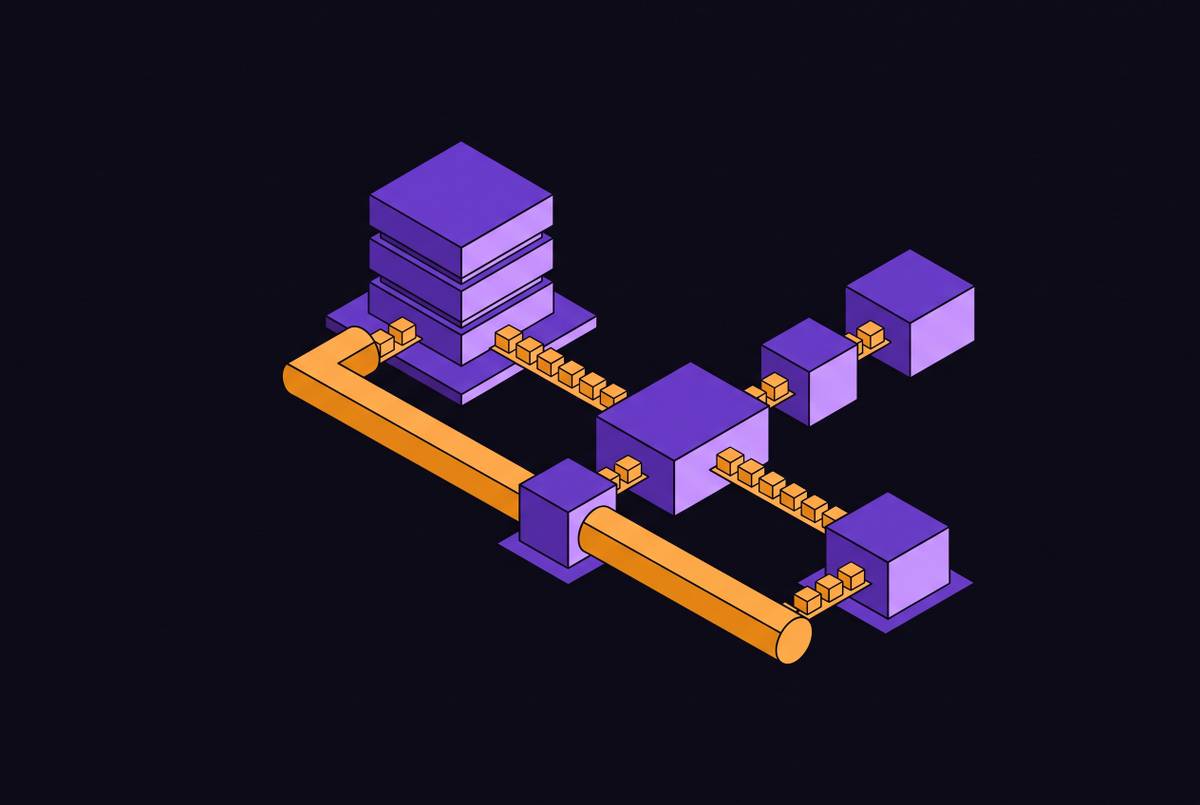
A single semaphore across the whole pipeline treats unlike work as though it had one throughput profile. Ingestion waits for pages, embedding waits for vector generation, and write-back depends on what the index can absorb. Tying them together lets the slowest stage hold on to capacity that another stage could use. The structural fix is to separate them and give each its own concurrency contract. A directed acyclic graph, or DAG, is the recommended starting point because it leaves room for parallel branches without a disruptive production redesign.
Embedding makes the cost of tight coupling clear. Queuing embeddings synchronously blocks progress on API responses and can compound into hours of delay across thousands of documents. Async batched workers with controlled concurrency let parsing continue while earlier chunks wait for vectors. Write-back needs its own controlled batches, with limits on upsert size. Most vector databases suffer sharp throughput drops when oversized batches trigger background merge operations.
Independent workers also make metadata discipline essential. Source URI, ingestion timestamp, document version hash, and chunk position index should travel with the data before embedding begins. Otherwise, out-of-order processing after splitting can lose the association between a chunk and its source. Version hashes also catch substantively identical re-ingested files before duplicate chunks spread through index updates. When ingestion is delegated to an API such as Context, its documented controls should govern that stage, leaving embedding and write-back with their own throttles.
Why exactly-once callback delivery is formally impossible and what builders can actually guarantee instead
Exactly-once delivery over HTTP is impossible in principle. The Two Generals Problem explains why it is hard to reach agreement when communication is unreliable. The FLP impossibility theorem (1985) is related but distinct, showing that consensus cannot be guaranteed in an asynchronous network where even one participant may crash. Neither result is a defect that a webhook provider can fix through a better implementation.
The useful distinction is between delivering a message and producing its effect. Delivery may repeat, but the consumer can prevent a repeated message from producing a second side effect. That is the job of idempotency, and it belongs on the receiving side. At-least-once transport with an idempotent consumer gives an achievable exactly-once effect, usually called effectively-once.
Managed webhook contracts differ in how they support that target. Retry policies, deduplication windows, recovery tools, and responsibility for consumer-side idempotency all matter. A retry promise does not tell the builder how long repeats remain possible or how failed deliveries can be recovered. Those terms must be read together. Switching providers can change what the consumer must do even when both call their delivery at-least-once.
The production failure mode that looks like success: silent job completion without consumer notification
The dangerous async failure is a crawl that finishes successfully while the pipeline's database never hears about it. Submission returns an identifier, and the results arrive later through a separate path. That breaks the convenient link between a request and the response its caller can inspect. There may be no exception at the submission call site. A successful submission therefore says nothing about whether the consumer will learn that the job is complete.
The characteristic sequence is straightforward. The crawl finishes, its callback fails within the provider's timeout window, and retries begin. The consumer stays down or keeps timing out until the retry window ends. The state store still shows a submitted job, with no completion and no error log at the ingestion layer. This failure is harder to spot than an explicit error because the expected signal never arrives.
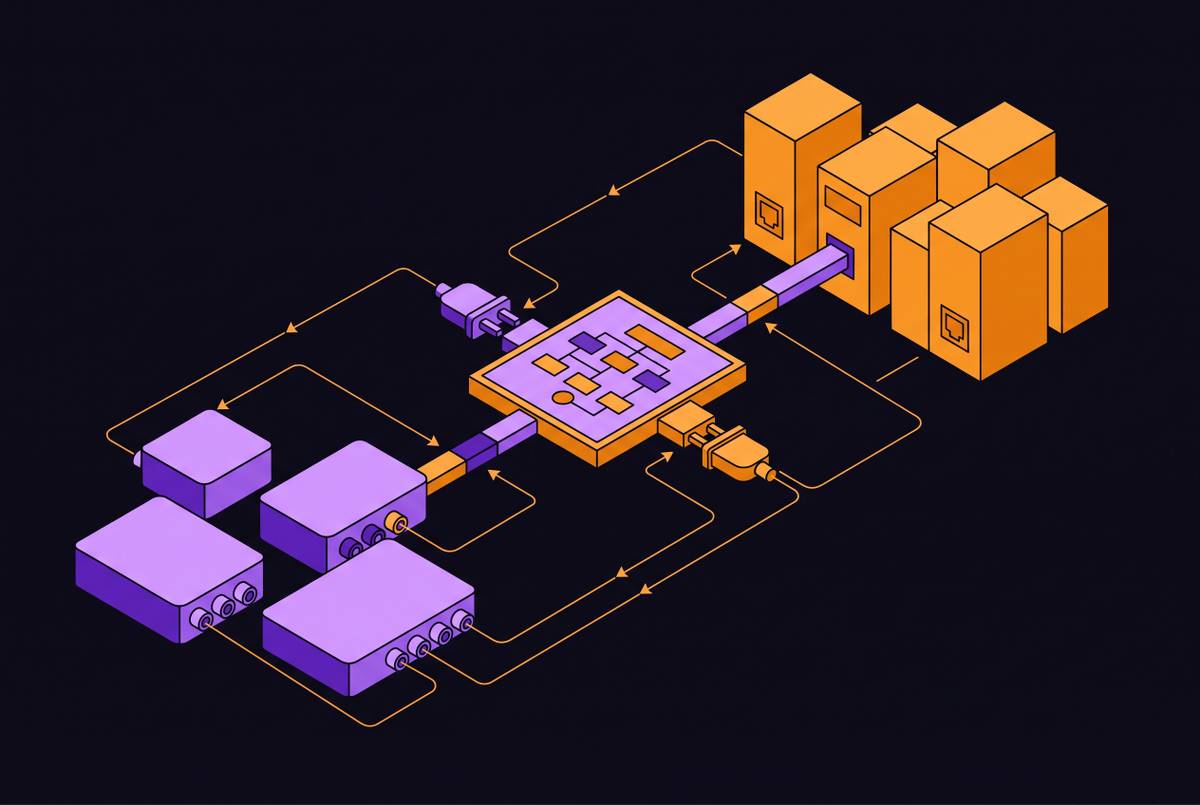
The prescribed pattern separates acknowledgment from the work needed to process results. The callback handler should return a 2xx within the provider's timeout window and put the work in a durable queue for background workers to process. Processed event IDs need a TTL longer than the full retry window, with a check before processing to prevent duplicate effects. For durable recovery, builders should evaluate workflow frameworks including Temporal, Inngest, DBOS, and Restate. These keep workflow state and make side effects safe to replay, so they are a clear choice to assess for long-running jobs that must span crashes or restarts.
Inter-stage schema contracts and validation checkpoints that stop corruption before it reaches the retrieval index
Reliable delivery does not make the delivered data correct. Once callbacks are handled, vague stage handoffs become a route for silent corruption. Each upstream output and downstream input needs an exact schema, carried with the record as a Schema Manifest. That manifest describes field names, valid ranges, data types, and null semantics. Without it, agents can read the same field in different ways while every stage seems to work.
Validation belongs at three boundaries, each with a different job. Post-parse validation checks structural integrity. Post-extract validation checks field confidence and sends values that fall below the threshold to human review. Pre-handoff validation enforces the schema before the output reaches downstream consumers, where mistakes become harder to trace.
The retrieval consequence matters more than a parsing error. An extractor built around one document layout can silently misclassify values when a new format arrives. The index accepts those values, and retrieval can later serve wrong, stale, or contradictory chunks to an LLM. A RAG pipeline that started clean can therefore degrade within months without a deployment change. Schema enforcement needs to guard both meaning and payload readability.
Chunking is part of that same contract. Fixed-size splitting can cut tables mid-row or split a claim from the evidence that supports it, while semantic chunking follows logical boundaries so each chunk holds a whole unit of meaning. A specification agent defines field semantics, a validation agent checks quality, and an execution agent triggers the next stage. Only the execution agent gets write access, and only after validation passes.
How a web scraping API for AI agents and LLM pipelines fits explicit contracts
Even a well-controlled pipeline fails its purpose if the incoming web content is stale or requires fragile, site-specific cleaning. A model trained a year ago does not have last week's policy update. Retrieval can close that gap only when the indexed content is fresh and clean. The acquisition layer therefore needs to return content that the pipeline can use along with successful HTTP responses. With raw HTML, downstream stages still have to do the cleaning and normalization.
A structured extraction API can reduce that work by returning LLM-ready Markdown directly. Extraction then has to match the predictability of the target pages. CSS/XPath templates suit stable schemas, LLM prompts suit content-aware extraction, and auto models cover common page types such as products, reviews, and listings. Natural language extraction is useful when product details sit inside descriptions or conditional content resists a predictable CSS class.
Context.dev provides a single REST API that converts URLs into LLM-ready Markdown, crawls entire websites, and extracts structured data against developer-defined JSON schemas. Those outputs fit the chunking and embedding boundaries described above without requiring raw HTML to be the handoff format. Context's customers include Mintlify, SiteGPT, and Sourcely, which use it as a data infrastructure layer. Its role as the extraction substrate leaves the pipeline responsible for validation and delivery contracts. Returning structured content cuts the cleaning work but does not prove that each extracted field is correct.
Brand intelligence shows how that distinction works in practice. A model can use a screenshot and visible text to produce a structured analysis covering founding thesis, positioning, buyer personas, voice attributes, and visual brand rationale. Validation against a JSON schema then makes that output ready for downstream agents to use directly. Live extraction supplies the material, while the schema governs its handoff. Both are necessary when the endpoint is an LLM reasoning over the result.
Reading the contract your API offers and matching it to your pipeline's actual concurrency shape
Selection starts by identifying whether demand is bursty or sustained and whether requests are uniform or mixed. Then read the API's lane and rate-limit terms and choose the fewest lanes that can handle peak demand without provider-side throttling or IP bans. For an extraction option such as Context, the parallelism contract deserves the same scrutiny as Markdown quality and schema support. Structured output is valuable only if the ingestion layer can supply it under the required load.
Next, read the delivery terms to see what the sender and consumer must each do. Determine retry counts and deduplication windows, separate prompt acknowledgment from background processing, and retain processed event IDs beyond the full retry window. Define the Schema Manifest before writing pipeline code, with validation at post-parse, post-extract, and pre-handoff. Send low-confidence fields to human review so that uncertainty does not get lost in the index. Evaluate durable workflows when long-running jobs need to survive process or infrastructure interruptions.
Finally, instrument each stage from day one. Aggregate metrics hide bottlenecks that per-stage latency, throughput, and error rates expose. Consolidating acquisition behind a well-designed extraction API can reduce the scrapers, crawlers, and data vendors whose contracts the team must maintain. That is the practical case for an API-first approach, with the limitation that one API cannot remove every failure mode. A pipeline avoids stalls and silent corruption when its contracts are explicit and its moving parts are few enough to reason about.