Agent Architecture
Interrupt and Human-in-the-Loop Checkpoints for Autonomous Agents
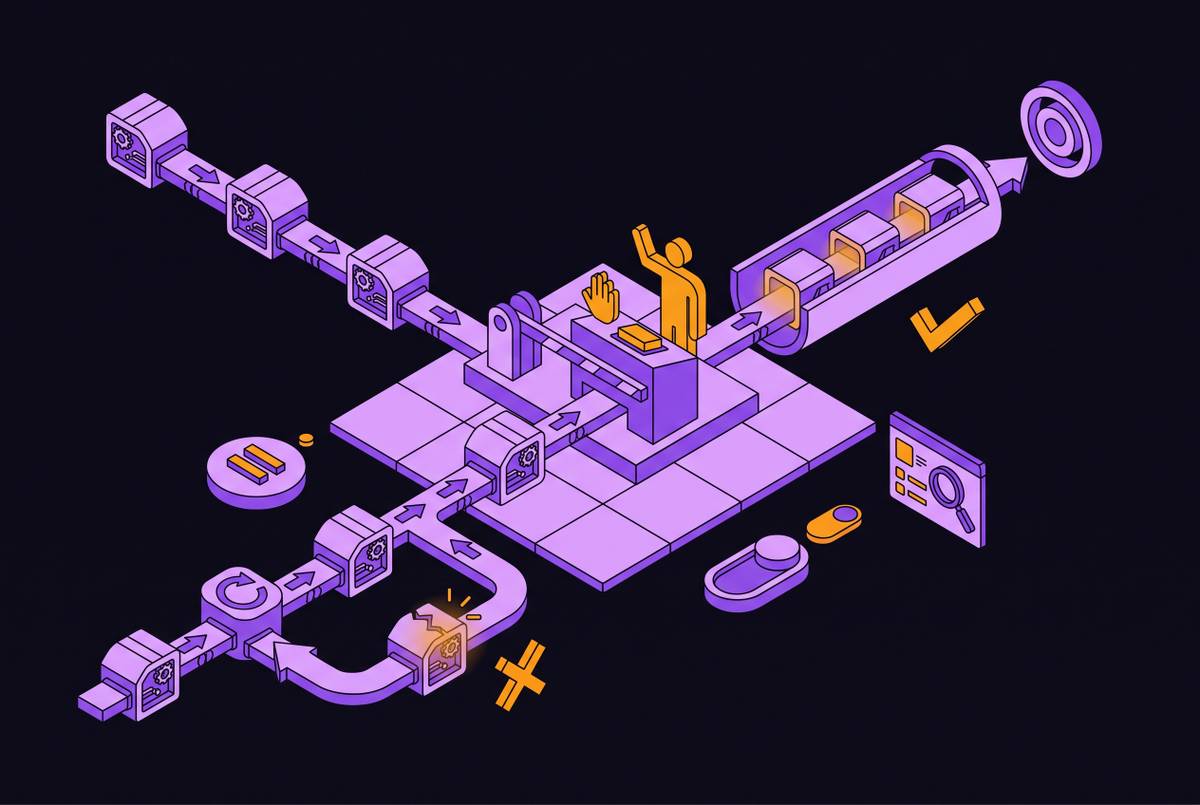
Building guardrails into autonomous agents prevents costly mistakes that spread at machine speed.
Marcus Szymański · September 29, 2026 · 11 min read
Section
9 stories in Agent Architecture
Building guardrails into autonomous agents prevents costly mistakes that spread at machine speed.
Agents burn through massive context windows fast—here's how to manage the depletion.
Saving agent state at key points lets long-running tasks resume from failure instead of restarting.
Agents need episodic, semantic, and procedural memory to survive between sessions.
Enforcing agent boundaries in code prevents failures that prompts can't fix.
ReAct handles surprises better, but Plan-and-Execute cuts costs if you can plan upfront.
LLMs plan once and freeze; this approach rebuilds the plan as it learns.
How to design tool schemas that actually make LLM agents work reliably.
Specialized agents working in parallel outperform a single generalist model on complex tasks.