Web Retrieval as a Declared Agent Capability Not a Bespoke Engineering Project
Web retrieval should be a declared agent tool, not a custom engineering project.

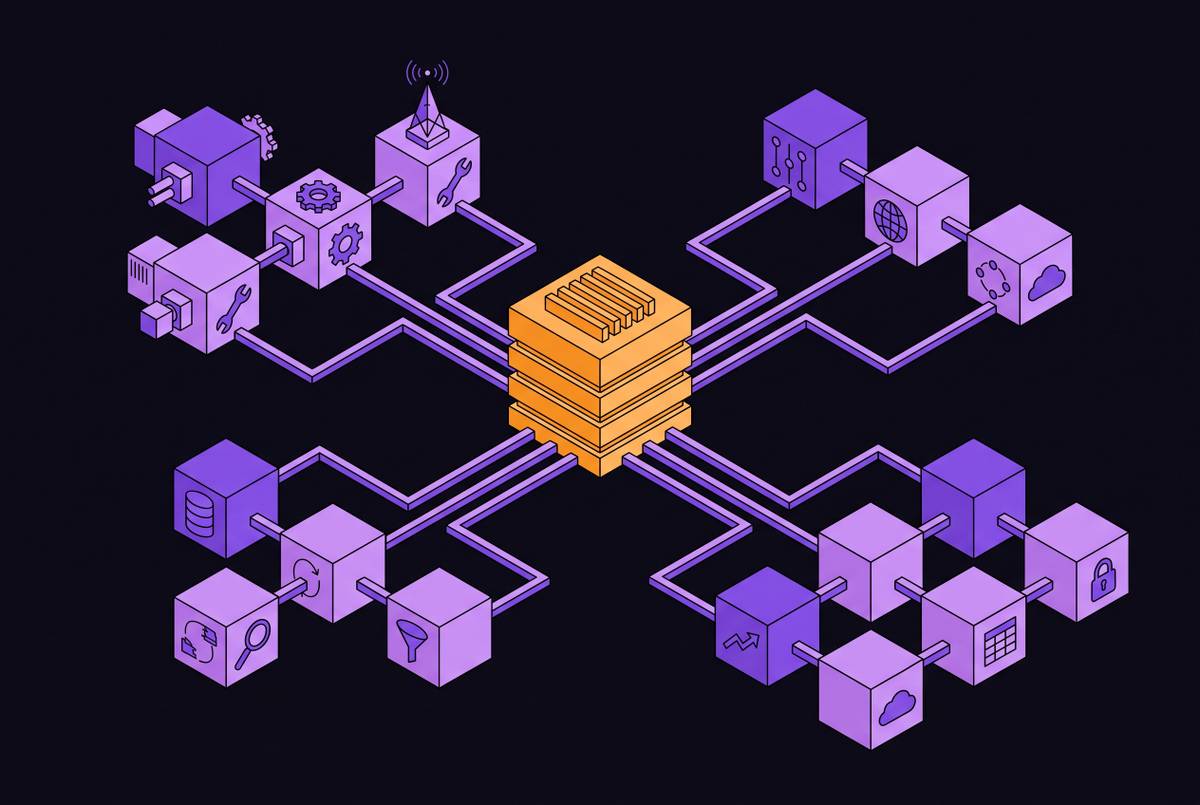
A web scraping API for AI agents and LLM pipelines should be a declared tool that returns content the team can use, rather than raw HTML that gives it another engineering project. The best default is a single AI-native retrieval API that handles search, extraction, and change tracking. That moves scraping maintenance to the provider while leaving the team responsible for freshness, failure handling, and answer quality.
The architectural shift from bespoke scraping project to declared agent capability
On Monday morning, the old task was to write a scraper, repair selectors, schedule crawl jobs, and keep the infrastructure running. Only then could an agent read a live page. The new task is to register a retrieval tool that the agent can call when it needs information. It sits beside a calculator or database query.
That change follows how agents are now assembled. Planning, memory, and tool use are separate parts that can work together without being built as one system. The International AI Safety Report 2026 describes advances since January 2025 in combining models with tools such as memory, computer interfaces, and web browsers, collectively called “scaffolding.” Retrieval fits into that structure as a named capability. When the provider handles the underlying execution, selector repairs and crawler uptime stop being the product team’s daily work.
What the agent loop actually looks like when retrieval is a tool call
An agent starts with a goal, observes a page, decides on an action, executes it, and adapts. Retrieval supplies the observation. If that observation is wrong, everything after it rests on bad evidence, however capable the model may be. A successful request is not necessarily a successful fetch.
For example, a tool can report success while returning a bot-detection page, leaving the model to extract product data from a captcha screen. JavaScript-rendered content can be absent from the raw response, while a guessed CSS selector can stop working after a page changes. Session loss can interrupt a task that began with a valid login. These are failures in the fetch layer.
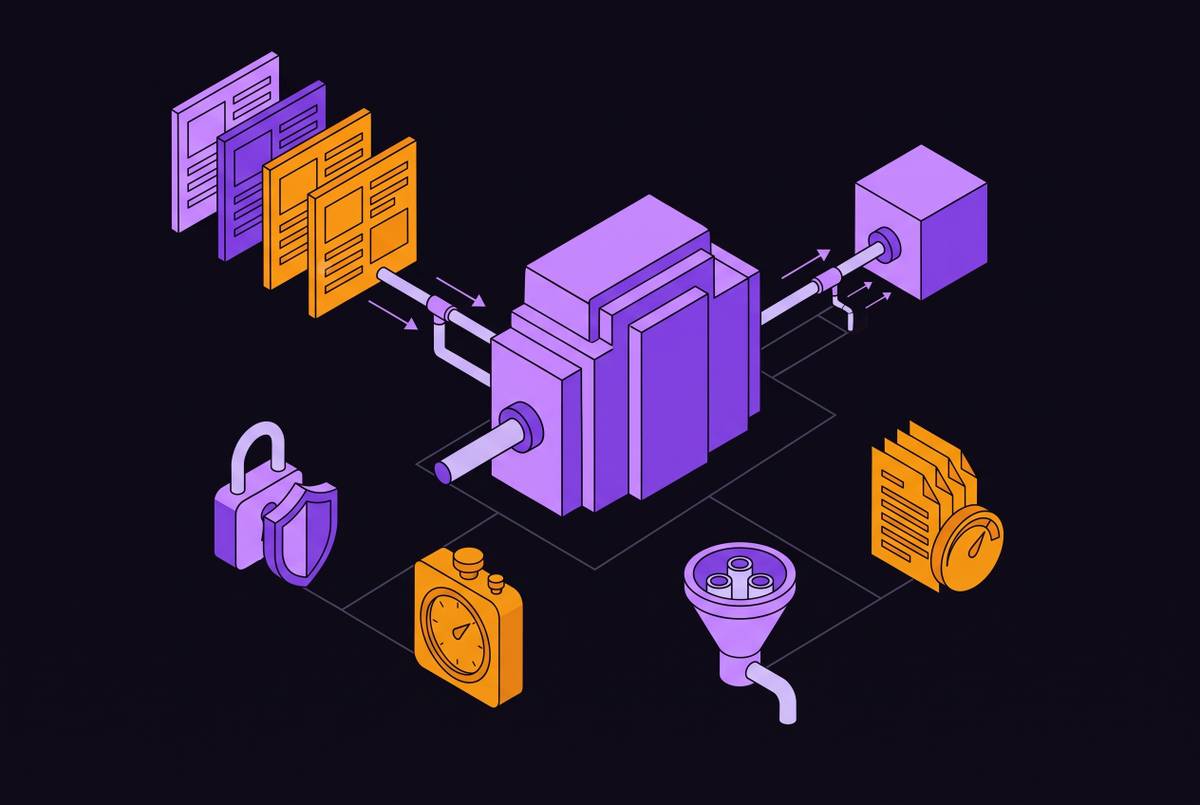
Repeated attempts make the problem more expensive. Unbounded retries on blocked or empty pages drive up agent costs, while raw HTML spends tokens on navigation, cookie banners, and tracking scripts. Declaring retrieval therefore means more than wrapping fetch(url) in a tool name. The tool needs to handle blocking, rendering, sessions, and clean output so that the agent receives evidence it can actually use.
Why tool-use standardization — not just convenience — is what makes this shift real
Tool-use protocols make this arrangement practical by standardizing how agents discover and call external capabilities. MCP is one way to use that shared interface. Retrieval can become a replaceable part of the agent.
Direct API integration and hosted MCP servers offer different levels of control. With direct integration, the application exposes a provider’s endpoint as a tool and controls query construction, result count, content depth, domain filters, freshness, caching, and retries. A hosted MCP server exposes tools that compatible clients can discover, but its available controls depend on the provider’s implementation. If the application-level contract stays the same, a team can change providers without rebuilding the agent’s reasoning loop.
Built-in tools such as OpenAI web_search and Anthropic Claude web_search sit at the other end of this trade-off. They save the team the work of integration, but the provider decides how retrieval works and how it is configured. External APIs let the team see the retrieved passages and use controls for tracing, evaluation, and tuning. Standardization makes declaration possible, but it does not make every declared tool equivalent.
Which web scraping APIs return LLM-ready content rather than raw HTML?
SERP APIs return titles, URLs, and snippets, leaving page content as a separate job. For agent reasoning, that can mean crawling and rendering the page again and stripping out markup before the model gets useful text. AI-native search APIs instead return ranked results with extracted text, Markdown, or structured JSON in one call. Built-in model search tools simplify access further, at the cost of control over retrieval. These interfaces solve different problems.
The output sets a hard limit on answer quality. Snippets save tokens, query-relevant excerpts provide focused evidence, and full-page Markdown supports tasks that need longer passages. Reliable URLs, titles, and publication dates make attribution possible and let teams assess whether a cited page supports a claim. Freshness controls, including recency windows and cache-age settings, set how up to date the evidence is.
Providers need to be tested on real agent tasks with the conditions kept the same. Retrieval quality, freshness, usable content, source metadata, total task latency, cost per correct answer, and MCP configuration depth are the relevant criteria. Vendor benchmarks using different models, prompts, and questions cannot settle that choice. Parallel Web Systems illustrates broader capability coverage through its Search, Extract, Task, FindAll, and Monitor APIs, spanning search, extraction, deep research, entity discovery, and change tracking.
The freshness problem that static RAG creates and why live retrieval dissolves it at the architecture level
Prices, library versions, regulations, security CVEs, and competitor positioning can change faster than an indexing schedule. Static retrieval-augmented generation can only retrieve documents already indexed, so it can confidently answer from information that has expired. Better reasoning does not repair that gap.
Live retrieval changes where freshness is handled. A query-time search replaces the ingest, chunk, embed, and store sequence for web content that needs current evidence. That removes the need to maintain a vector database and re-indexing pipeline for that content. It does not, however, prove that every retrieved result is relevant or complete. The FreshStack benchmark from NeurIPS 2025 found that existing retrieval models significantly underperform oracle approaches on niche technical domains, showing that retrieval quality still needs evaluation.
Time-sensitive queries use live retrieval, while stable reference content can use cached chunks under a freshness TTL. Volatile prices, scores, and breaking news call for seconds to minutes, while stable reference material can allow hours to weeks.
Schema-driven extraction as the right abstraction for getting web content into AI pipelines
A pipeline that needs structured fields still has work to do if its retrieval tool returns raw HTML or unstructured Markdown. With schema-driven extraction, the declared capability does that work. The team defines the output before choosing how to read a page.
The contrast is concrete. Instead of writing a CSS or XPath selector for a product price on each site, the team defines a JSON schema for the data it needs. An LLM-powered extraction tool reads the page by meaning and validates the result against that schema. A layout change is then less likely to demand a new extraction rule because the contract describes the data.
This is the useful boundary for structured pipelines. Reasoning layers and RAG workflows get fields they can count on instead of a different custom format for every target site. Scrapfly’s AI Extraction API supports structured extraction through templates, LLM prompts, or auto models. The architectural benefit is not merely fewer selectors, but less downstream cleaning, latency, and token use between retrieval and consumption.
Change detection as a pipeline trigger, not a dashboard notification
A source important enough to feed an AI pipeline needs a way to trigger updates when its content changes. The sharpest failure is often the output format. An email saying “something changed on this page” requires a person to interpret it, while a webhook with structured JSON can trigger a re-fetch and the steps that follow. Detection alone does not make the pipeline automated.
Competitive intelligence makes the distinction clear. A pricing or positioning change can be useful, while a rotating testimonial, timestamp, or layout adjustment may be noise. Tracking newly announced products also calls for telling useful content apart from edits that only change how a page looks.
The other use is keeping an agent or retrieval index current. A stale source can be especially misleading because the model may cite it confidently. Structured change events connect monitoring to the same retrieval and extraction contract already feeding the pipeline.
The honest infrastructure objection and what it actually means for teams declaring retrieval today
A team can wire up a search API in an afternoon and spend the following weeks explaining unacceptable latency and wrong answers about recent events. The objection is valid. A standardized interface does not make production execution simple, and declaring a tool does not design the system around it. Treating web grounding as just a search query leaves its hardest dependencies unmanaged.
Reliable integration is still a distributed systems problem. It involves tiered freshness commitments, deduplication, semantic caches, circuit breakers, and explicit content provenance. Those concerns decide how retrieval behaves within a larger task, especially when live calls add latency or fail. They remain even when the provider returns clean content.
The ownership boundary is the point. A suitable provider takes on anti-bot infrastructure, proxies, rendering, sessions, index maintenance, crawl scheduling, and output normalization. The product team still defines freshness TTLs, chooses live versus cached retrieval, sets retry limits and circuit breakers, and evaluates quality. The team spends its engineering time on an integration contract that fits its product instead of repeatedly maintaining machinery the provider already runs.
Why consolidating on a single retrieval API beats maintaining a fragmented stack
Separate scraping, crawling, search, extraction, and monitoring vendors create separate maintenance surfaces. Each brings authentication, rate limits, output formats, failure behavior, and version changes. Data passes through more transformations before reaching the model, adding latency and opportunities for quality loss. When an answer is wrong, tracing the cause crosses those same boundaries.
Vendor changes add another burden. Microsoft retired the Bing Search APIs in August 2025, giving teams approximately three months to migrate. With one API, the team still depends on a provider but has fewer separate contracts to maintain. Search, extraction, crawling, and change tracking can share one output format and consistent source metadata rather than assembling provenance across mismatched systems.
Rank tracking and Google vertical access can be reasons to use a SERP API, while multi-step form workflows can need browser automation. Research agents, RAG freshness, competitive monitoring, and structured extraction are better served by a single AI-native retrieval API that covers what they need.
What teams building AI-native products should do differently starting now
The shift starts this week with a choice about who does the work. Audit every scraper, crawler, search integration, and extraction script. For each, separate work that solves a problem no retrieval API covers from maintenance that a provider could own.
SERP APIs suit rank tracking and Google verticals, while AI-native APIs suit reasoning, grounding, and structured extraction. Built-in model tools fit when the team can accept the provider’s control and limits on what it can trace.
Design the hybrid retrieval tier before shipping. Assign live retrieval or a cached index by query type, and set freshness TTLs for each data domain.
Wire meaningful changes to structured pipeline events. A watched source feeding the index should trigger a re-fetch when relevant content changes. The output must be usable by the next system.
Test providers on the team’s own agent tasks. Use the same model and question set, measure cost per correct answer, and set a regression threshold before deployment.