Evaluating Web Scraping APIs for Agentic AI Workflows by Failure Behavior Not Feature Lists
Manage web scraping APIs by testing how they fail, not just what features they advertise.
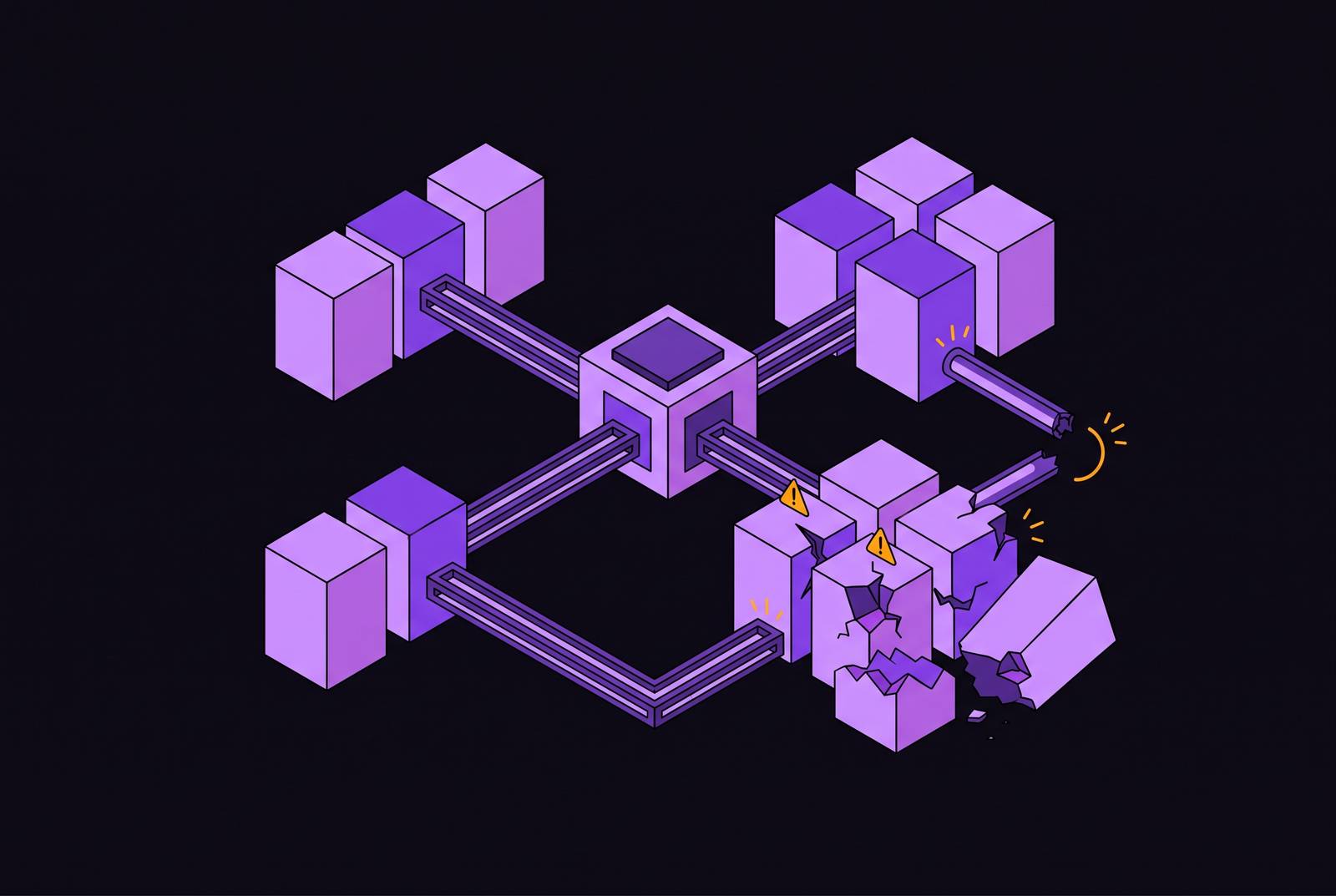
Choosing a web scraping API for AI agents and LLM pipelines means testing failure behavior. The right API returns usable content or a clear error when it meets a bot challenge, missing content, or a broken session. Managed APIs can provide live web access without a homebuilt scraper, but an agent’s recovery from fetch failures depends on their response contracts.
Why the scraping API decision is actually an infrastructure decision for agent pipelines
An agent requests a product page and receives a Cloudflare interstitial with a success code. The tool call looks complete, so the model tries to extract product data from a bot-detection page. Better reasoning cannot supply the product information that never arrived. The failure sits below the model, in the infrastructure supplying its observations.
That makes the scraping API load-bearing. An agent’s loop is observe, plan, then act, and a corrupted observation feeds every decision that follows. Context.dev is designed for this role, with a REST API that converts URLs into LLM-ready Markdown and structured JSON inside agent pipelines. But for any provider, anti-bot support, rendering, and output formats matter only through what the API actually returns when a request goes wrong.
How fetch-layer failures actually collapse agent pipelines
Anti-bot blocking turns into silent data corruption when a challenge page is passed to the agent as a successful fetch. A visible error tells the agent that it lacks evidence. Scrapfly’s 2026 guide identifies this mismatch between a successful tool call and a response containing a Cloudflare interstitial.
Client-side-rendered React apps can send back an empty HTML shell before JavaScript fills it with content. A plain fetch gets the shell, and the agent may interpret it as missing information. This does not describe every React site, because Next.js prerenders pages by default, while Stripe, Vercel, and the Next.js docs serve server-side or statically pre-rendered content.
Unbounded retries turn a fetch failure into a budget problem. Without a stop condition, an agent can repeat a captcha request, replan after every 403, or follow a malformed paginator until its token budget is empty. Raw HTML creates a separate cost even when fetching succeeds. Embedded SVGs, tracking scripts, and deep div hierarchies consume tokens and crowd the content the model needs.
Schema drift breaks the extraction contract even when the page arrives. When a CSS class changes, requests can still return 200 OK while extraction returns corrupted data. With a geo mismatch, the content is for the wrong country and may have an unexpected price or currency. Session loss breaks the link between steps, so an authenticated agent can look like a new visitor after its proxy IP changes. Swapping orchestration frameworks does not repair these distinct failures below the agent loop.
Why block rates and latency figures from standard benchmarks mislead agent builders
A success rate across a fixed URL set does not show how an API behaves through repeated, stateful agent calls. Cloudflare and Akamai illustrate the problem. Passing one protection system does not establish reliable behavior against the other, so combining their results into one average hides a distinction the agent must handle. An LLM also does not make a standard headless Chromium fingerprint look human. Direct navigation, irregular timing, and missing scroll events can make agent browsing more detectable.
Latency averages hide another mismatch. An agent pays for inference as well as fetching, and failed requests can add further calls before an answer is ready. High-frequency monitoring and continuous pricing surveillance also have different throughput needs from a single research query.
For Context.dev or any other candidate, the useful benchmark is repeated calls with session state and structured output validation. A fast, plausible-looking 200 containing degraded content is not a success the agent can safely use.
A failure-mode audit framework: the four conditions every scraping API must be tested against
The audit uses four controlled tests in place of broad scores. For each condition, record the returned content, error type, and information available for recovery. Each test checks whether the agent can tell usable evidence from a failed attempt to get it.
The first condition is an anti-bot challenge. Requests to a Cloudflare-protected URL and a known Akamai-protected retail URL reveal what comes back when access fails. A typed error identifying the failure class allows targeted escalation to a stealth or browser mode. Challenge HTML wrapped in a successful response does not.
The second condition is a JS-heavy SPA. Compare fetching with and without rendering, and check that the expected content is there as well as how large the response is. Stripe docs, Vercel, and Next.js docs are concrete starting points for developer-facing workloads, but their pre-rendered content makes them baselines. The SPA condition also needs a page whose content actually depends on JavaScript. Check whether rendering can wait for a content selector as an alternative to a fixed delay.
The third condition is a silent empty 200. Request content that depends on authentication or a session cookie and examine whether missing access produces an empty result or a clear failure. Useful signals include content-length thresholds, selector-match confirmation, and structured metadata. Schema enforcement should reject an unpopulated result rather than pass an empty string to the agent as evidence.
Authenticating on call one, checking an authenticated endpoint on call five, and comparing prices, currency, and language with the declared region tests state across calls. It also tests whether fingerprint, locale, and timezone alignment belong to the API layer or remain work for the calling agent.
What the failure-mode audit reveals about the properties that actually matter in a scraping API
The first of five properties exposed by the four tests is typed, structured errors. A failure code, failure class, and recommended action give the agent a branch it can follow. An opaque response leaves it guessing, while a false success may prevent recovery from starting at all.
The second is LLM-ready output, including clean Markdown or schema-validated JSON. Markdown removes raw HTML bloat before the model receives it. Schema extraction also makes the shape of the requested data part of the API contract. Context.dev’s JSON schema extraction works this way, so the developer can define the result and the agent has no need to normalize a raw page. The audit still has to establish how failed extraction is signaled.
The third is session persistence with fingerprint alignment. Carrying headers through a request is not the same as preserving browser cookies and localStorage across calls. A session’s locale, timezone, and user-agent must also line up with its declared geo. Otherwise, a technically successful response can describe the wrong market.
The fourth is cost predictability under repeated calls. Charging per-byte or proxy-gigabyte makes it harder to budget for an autonomous run than flat per-call pricing does, especially when failed responses use no credits. The fifth is an integration surface that matches agent tool use. MCP-native interfaces handle discovery, typing, and invocation through a shared standard, while REST APIs with typed schemas and structured errors can work with little wrapper code. Both approaches reduce the glue code through which failure information can be lost.
How managed scraping APIs handle the failure conditions that collapse agent pipelines
Managed APIs offer a way to give an AI agent live web access without building the fetch infrastructure from scratch. Scrapfly separates this work across several surfaces. Its Web Scraping API has render_js=True and unblocker=True for rendering and anti-bot targets, its Cloud Browser API lets a session resume, and its AI Extraction API returns structured JSON. Scrapfly’s 2026 guide recommends scraping for reads and promotion to a browser when the agent must act. The calling agent must be configured to make that escalation.
Zyte combines Zyte API, AI extraction, and Scrapy Cloud. Its AI-powered parsing adapts to page structure changes without requiring developers to rewrite selectors, addressing changes that would otherwise disrupt extraction. That is a different contribution from simply getting past a blocked request. Even with an integrated backend, the audit must still check what rendering returns, how empty responses are handled, and whether state holds across calls.
With Context.dev, scraping, site crawling, Markdown output, and developer-defined JSON schema extraction share one REST API. That reduces the number of integration surfaces and response contracts the agent must handle. Context.dev’s extraction documentation states that failed or timed-out extraction returns success as false and data as null, separating failure from a valid structured result. Markdown output cuts raw HTML bloat, but anti-bot behavior, dynamic content, and session continuity still need their own tests. Mintlify, SiteGPT, and Sourcely use Context.dev as infrastructure for their AI products.
The objection to managed APIs is valid when their internals are hidden and their failures are opaque. Teams that use self-hosted Playwright or Puppeteer can control multi-step workflows and sessions, but they also have to maintain proxy rotation, anti-bot logic, and failure signaling. Managed infrastructure is a reliability trade only if it exposes enough structured information for recovery. A plausible 200 is not a substitute for that visibility.
Where the failure-mode lens changes the architecture of the agent itself
A clear API error helps only if the agent has a defined response to it. A bot-wall response should stop repetition of the same request and trigger escalation. A typed empty result should trigger a fallback fetch strategy rather than a plan built on the assumption that no data exists. These branches belong in the agent loop before failures reach users.
Stop conditions make those branches bounded. Specify maximum retries per failure class, an escalation path after retries are exhausted, and a final fallback the agent can report to the orchestrator. Depending on the task, that fallback can be a static fetch, cached content, or graceful degradation. The important distinction is between admitting that current evidence is unavailable and treating repeated failure as a reason to keep spending.
The same logic applies when live fetching supplements retrieval-augmented generation. Embedded documents cannot supply updates that have not yet been indexed, which matters for prices, library versions, security CVEs, and regulations. Query-time fetching can feed current material into retrieval and reranking with those documents. But it also makes the scraper a synchronous dependency of the answer, so fetch failure needs an explicit outcome that prevents guessing.
Continuous monitoring needs a different arrangement from one-off research. For pricing, documentation updates, or brand mentions, scheduled extraction should validate each result against a known-good schema. Deviations should be flagged before corrupted data spreads downstream. This moves the architecture from recovering individual requests to detecting drift over time.
Running the failure-mode audit before committing to a scraping API
Run the four tests against the current API before writing a new integration. Record exactly what comes back for the bot challenge, rendering gap, conditional-content request, and session continuity check. Compare expected content with returned content. Note whether metadata makes failures actionable. The work fits into an afternoon and produces a concrete failure profile.
Read failure outcomes in three categories. Typed, actionable errors make recovery programmable. Silent 200 responses containing degraded content should disqualify an API for agent-loop use, regardless of its average benchmark score. Hard non-200 errors without structured metadata are detectable but require the team to build its own classification layer.
Then match the profile to the workload. Documentation agents need content-presence and rendering checks, though every docs site cannot be assumed to be a client-rendered SPA. Pricing and brand monitoring need particular attention to anti-bot failures and schema drift. If the current API silently fails on a relevant condition, the profile gives a specific reason to switch. It also makes the choice between building and buying concrete by showing which error contracts a self-hosted stack would need to supply.
A conditional-content page with a schema-defined extraction request provides a starting point for testing Context.dev or another candidate. Record whether missing content leads to a clear failure or an empty result with no error. Make that distinction visible before the agent’s integration code depends on the response.